
Many column inches have been spilt questioning the knowledge of a live-service technique. Sony gambled and misplaced, as did many different firms chasing the dream of regular recurring revenues, whereas corporations like Capcom that caught to the normal path have emerged comparatively unscathed.
Highguard was one of many newer live-service casualties, a sport that was reportedly backed by the Tencent subsidiary TiMi Studio Group. However Tencent itself shouldn’t be shying away from the glittering promise that live service titles carry.

“I feel our holy grail is live service, proper?” says Yong-yi Zhu, VP and head of operations, technique and compliance at Tencent Video games.
“You take a look at Tencent’s DNA, it is Honor of Kings, League of Legends, Valorant. They’re video games that construct upon themselves, and it offers stability to the studio, it builds communities. And I feel extra and extra video games are about not simply participating folks for a brief time frame, it turns into a way of life.”
The agency’s sprawling, continuously shifting portfolio aspires to assist that life-style. However a wide-ranging dialog with Zhu confirms that live service is just one a part of its technique.
Evergreen goals
Loads has modified since GamesIndustry.biz final spoke with Zhu slightly below a yr in the past. The UK studios Splash Injury and Bulkhead have gone unbiased, following comparable strikes from The Chinese language Room and Secret Mode earlier in 2025. Zhu will not go into particulars on the separation, however says “for sure studios we really feel like we won’t assist them amplify their sport.”
.png?width=2048&height=2048&fit=bounds&quality=85&format=jpg&auto=webp)
“What’s actually massive for us is: does the partnership make sense? Are we bringing one thing to the desk as a lot because the builders are bringing one thing to the desk? And I feel in these instances, both there was doubtlessly a scarcity of synergy” – when it comes to the video games aligning with the agency’s long-term technique – “or there have been simply higher alternatives.” In the end, the agency determined they had been “higher standalone than they’re with Tencent.”
“There are specific conditions the place we purchase a studio and really now we have hassle integrating them”
Zhu is sanguine about not the entire firm’s many acquisitions figuring out. “There are specific conditions the place we purchase a studio and really now we have hassle integrating them due to market circumstances or cultural variations,” he says. “Not every thing, on the finish of the day, goes to be a slam dunk.”
So what’s the firm technique? Zhu says that evergreen titles are a key a part of it – each single and multiplayer, with the previous well-represented within the agency’s cell video games portfolio – however finally “it is actually about constructing sustainable communities long-term, having video games that proceed to have interaction with folks.” And whereas live service is the holy grail, it is not a singular focus. “It may be an IP that you simply construct up,” says Zhu. “This isn’t our sport, however you take a look at Name of Responsibility: we contemplate that an evergreen IP, though it is actually one model after one other.”

The last word intention is consistency: “You take a look at a number of premium video games: I feel prior to now, you’ve got seen a number of ups and downs with firms that launch a sport and have to put folks off. I feel extra and extra we’re making an attempt to carry stability, and you sometimes do not see Tencent doing the identical factor.”
The opposite key a part of Tencent’s technique is investing in “actually prime quality expertise,” says Zhu, once more emphasising that “it needs to be synergistic between Tencent and the developer.”
Doubling down
Zhu runs ops and technique for Tencent’s world video games enterprise, and has round 20 studios in his division. That features Miniclip, Sumo Digital, Funcom, Fats Shark, Sharkmob, 10 Chambers, and Stunlock Studios in Europe, in addition to Digital Extremes in North America and Grinding Gear Video games in New Zealand.

His focus is “much less about locations we’re about to go, and extra about how we guarantee these studios are profitable within the launches that they are about to have.” That features ensuring every receives acceptable assist from the broader Tencent ecosystem on issues like regional publishing, technical assist, testing, backend companies, or evaluation: “Issues like that the place we offer experience, as a result of we have completed it as Tencent within the home market, and now we’re making an attempt to translate that into the worldwide market,” says Zhu.
He provides the instance of consultants from throughout China and Europe coming to assist out on Dune Awakening. “They will simply sit alongside the devs at Funcom and work with them to resolve the problems. After which afterwards, if it is an ongoing concern, generally they’re going to stick round. And generally we even say, ‘Look, if it really works out, the individual can go to the studio and be a everlasting worker’.”
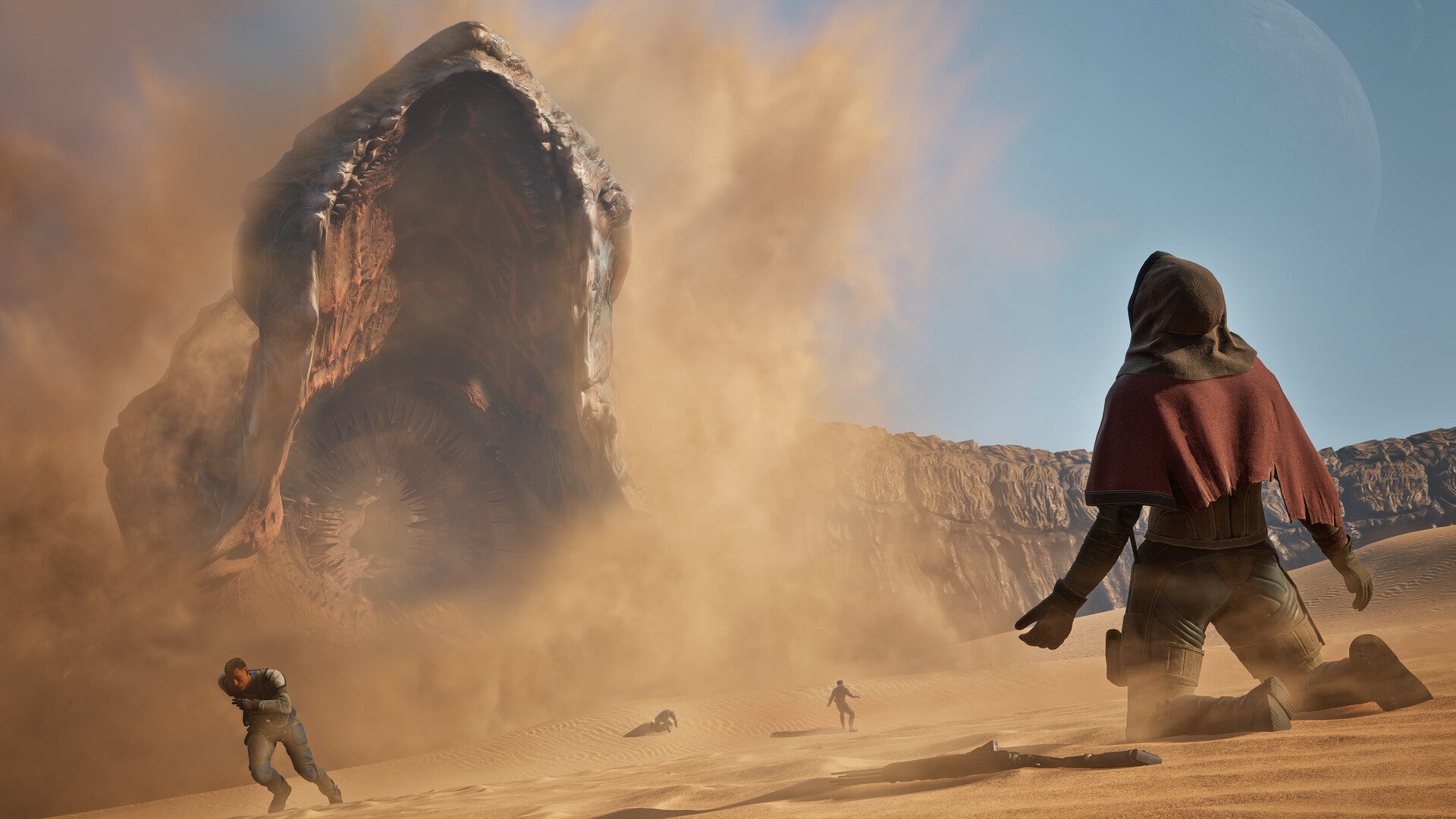
He clarifies that issues like artistic and creative design are largely left to particular person studios, however Tencent may swoop in to assist on points which can be frequent throughout studios, like specific points with Unreal Engine, or assist with publishing in sure areas like MENA or Southeast Asia.
A query of scale
Funcom noticed a wave of redundancies final October, and the Funcom-owned studio The Outsiders, maker of Metallic: Hellsinger, was closed. On the time, Funcom stated that the intention was to “focus our inside assets on releasing new content material, options, and enhancements” for Dune Awakening. So is Tencent’s technique to focus extra on greater, live-service titles somewhat than smaller tasks?
“It actually relies on the studio to be sincere,” says Zhu. He notes that Funcom had already been operating the live-service title Conan Exiles for a very long time when Tencent purchased the studio. “In order that’s part of their DNA. They design video games to be live companies, and we assist them on that journey.”

Different studios in Tencent’s portfolio, in the meantime, have tried live service, nevertheless it “did not work out,” and they’ve “now targeted extra on premium titles, as a result of that is been their bread and butter. And for us, we actually wish to assist construct studios which can be finest at school of their craft, no matter that is likely to be.”
However how small is just too small? Joe Brammer, CEO of Wardogs maker Bulkhead, advised GamesIndustry.biz earlier this yr that Tencent “would not take a look at any sport that was lower than £50 million.”
“I do not assume there’s something that is stopping us from making smaller video games”
Zhu disagrees. “I feel we take a look at video games throughout all scales, to be sincere. I feel for us, it is extra about the place the studio is on its journey and what its finish vacation spot is likely to be. May we assist them get greater? Generally we really feel like, hey, our experience would not fairly match, or perhaps the cultures do not match, however I do not assume there’s something that is stopping us from making smaller video games. We do have small video games in our portfolio.”
He describes Larian Studios and From Software program are “north stars” when it comes to Tencent’s studio investments (the corporate owns a minority stake in each), and that they’ve “constructed up video games over time, and not all of these video games have been very massive, however all of these video games have been purposeful and have continued to construct on the viewers, and have continued to assist them construct on their craft. I do not assume it is essentially true that we do not take a look at smaller video games.”
Exdev
Final time we spoke, Zhu talked about spinning up some Chinese language assist groups, with the concept of tying Tencent’s Western and Chinese language arms collectively extra intently. A yr later, he says not as a lot progress has been made on this entrance as he would have preferred, partially due to challenges working throughout completely different time zones. As a substitute, the main focus has switched to making an attempt to instill learnings from completely different studios throughout the group.

However he does see a future within the mannequin of smaller, core groups being supplemented by exterior improvement: a mannequin that has labored effectively for Star Wars: Galactic Racer. “At a excessive degree, I feel that is sensible,” he says. “We had been trying the opposite day on the improvement life cycle of Expedition 33, and it is a very comparable story.”
“For us, it is form of how many individuals ought to we carry on workers and how many individuals ought to we then leverage from an outsource vendor? Generally it is like, ‘Hey, we’d like excessive precision of us which can be making very intricate issues, and we wish them to all be in a sure location working collectively.’ And that is form of the prerogative of the studio head.”
Location has proved a key think about outsourcing, with some groups proud of distant companions, whereas others search for assist in the identical timezone. “And so we’re trying throughout the globe at what the choices are for our completely different studios. Sumo is doubtlessly going to assist our studios in Europe, as a result of they’re nearer. However being within the UK, it is in all probability not the most affordable place to be. So you have got trade-offs on these kinds of issues.”
“North America’s a harder and harder place to be, except you have got a really strong dev workforce that has labored collectively for a very long time”
This brings to thoughts Amir Satvat’s fascinating keynote speech at Gamescom Dev, which identified that jobs are disappearing in costly locales like California, however opening up in areas like Asia. As Satvat put it: “Head depend shifting from mainly North America to mainly anyplace else.”
Zhu agrees that usually, “North America’s a harder and harder place to be, except you have got a really strong dev workforce that has labored collectively for a very long time. I got here beforehand from Activision, the place we had been roughly all within the Santa Monica space, nevertheless it’s a workforce that is delivered content material yr over yr over yr over yr.” For assist groups, although, “it would not make sense to be in such an costly a part of the world.”
The shift to AI
It was notable that this yr’s Gamescom Opening Night time Live featured numerous extremely polished video games from Chinese language studios – which leads us to wonder if we’re seeing an influence shift within the video games business from West to East.
“I might say I hope so,” laughs Zhu. “I used to be born in China. However I feel the fact is video games like [Black Myth] Wukong actually impressed folks to make actually prime quality content material. They now know what actually, actually beauty like for console and PC.”
“I feel a number of Chinese language builders are like, ‘I understand how to make prime quality cell video games’, and now they’re like, ‘Oh, that is what beauty like for console and PC’. I feel in all probability prior to now they’ve completed a number of artwork outsourcing and issues like that that had been a bit of bit decrease degree, however now they’re like, ‘We all know what it appears like.’ After which in all probability they’ve higher tooling that may assist them on issues. And so it cuts that barrier and that hole.”
“China usually actually loves AI as a instrument”
That higher tooling consists of “issues like AI that may assist folks iterate extra,” says Zhu. “And AI for us shouldn’t be about changing folks. It is about making folks more practical and environment friendly throughout numerous various things. We have now improvement groups which can be a bit smaller, however they’re like, hey, now we are able to make extra content material, we did not wish to be an enormous improvement workforce. We like our household really feel of 30, 40 folks, however now we’re in a position to make greater high quality issues, and iterate extra, and give you cooler trying – no matter it’s that they are designing.”
“I feel that is in all probability true of the Chinese language builders, too, as a result of they’re form of rising up on this age of leveraging instruments,” he says. “China usually actually loves AI as a instrument.”
Within the West, against this, builders are typically extra reluctant to make use of AI, with moral considerations, copyright worries, and participant backlash all entrance of thoughts. “I feel folks ought to simply not be afraid of AI,” says Zhu. “It is just like the web, it is coming. And I spent a while personally to determine what’s one of the simplest ways to leverage AI in my each day life to make myself extra environment friendly.”
“I feel folks ought to simply not be afraid of AI. It is just like the web, it is coming”
He thinks that improvement groups ought to be extra “open to that mind-set” and ought to contemplate AI as “a real instrument.”
“And there is truthfully so many instruments now, whether or not it is in coding, whether or not it is in artwork, whether or not it is in no matter else you’ve got bought: it could possibly achieve this a lot for you.”
He says that Tencent typically encourages builders to make use of AI, “as a result of we predict there’s a number of potential, however once more, as a instrument. I feel on content material technology, that is a really completely different dialog. I feel that is in all probability additional away. For improvement, it is extra like we use this for idea artwork, we determine what it is like, then we’ll use AI instruments for rigging, for movement matching, for code evaluation. There’s so many alternative issues within the pipeline that [AI] can do. Even manufacturing administration instruments, they’re going to have AI bots of their Slack channel asking folks for homework and issues like that. So it may be utilized in numerous completely different ways in which’s not changing people, proper?”
He acknowledges that there are nonetheless some difficulties to work by way of, not least with regards to the copyright standing of content material produced by way of generative AI. “I do assume that is one thing that the AI business should determine,” he says. “As an instance the AI is simply utilizing our personal libraries, proper? That makes it very simple, as a result of that is our IP, we have completed it prior to now, and they’ve remixed that content material into one thing else. I feel that is OK versus utilizing one thing that is from a special content material creator or simply the overall net. And we take a look at that very intently. We make it possible for our knowledge is confined to our studios.”
This consists of agreements with every instrument supplier to make sure that knowledge would not find yourself being accessible exterior the constructing. “What we do not need is our builders creating issues that then get picked up from elsewhere, and then all of the sudden you’ve got bought variations of our issues in a special sport.”
.jpg?width=2048&height=2048&fit=bounds&quality=85&format=jpg&auto=webp)
With the backing of its huge dad or mum, Tencent Video games is able to experiment, inserting bets giant and small on all kinds of merchandise and studios. Whereas it is not too long ago retreated from Bulkhead and Secret Mode, and redirected AAA studio Lightspeed, our dialog happened the day after it introduced a minority funding in W4, the business improvement companion of the Godot engine. It appears possible that come subsequent Gamescom, Zhu may have some completely different tasks to speak about. However the throughline is engagement, whether or not by way of live service or not.
“On the finish of the day, I sit in video games, which is part of an even bigger Tencent ecosystem, and my purview is all the time about how can we hold folks engaged, make it possible for they’re having enjoyable,” he says. “As a result of, to say in a crass method, that interprets to the underside line. The extra folks love your sport, the extra they will play your sport.”