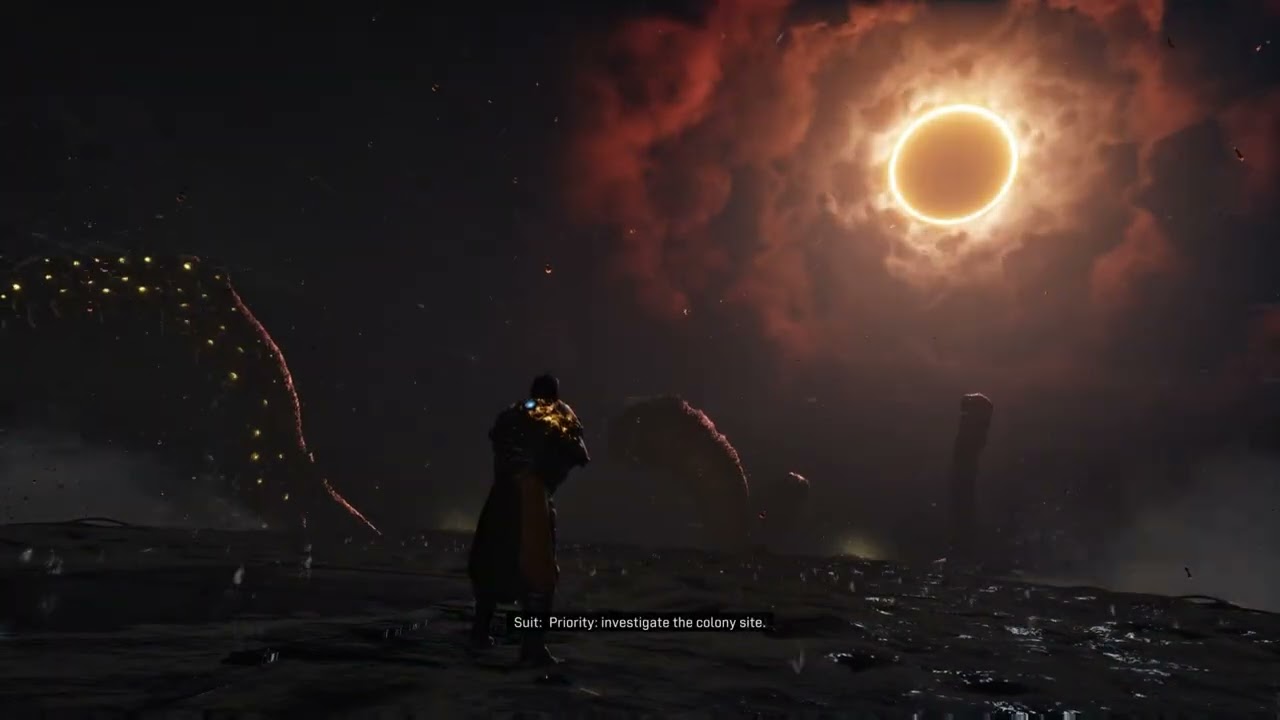
Housemarque and Nixxes developed Saros in shut collaboration; one space was growing the set-piece bosses. Housemarque introduced the artistic imaginative and prescient, world, fight language, visible ideas, and signature bullet-hell DNA. Nixxes introduced the bosses to life by encounter design, animation, environments, lighting, and technical implementation.
The outcome was a set of encounters designed to problem gamers, shock them, and ship the type of spectacle PlayStation gamers anticipate from a Housemarque motion expertise. Spoilers for the bosses of Saros forward, so learn at your individual threat.


Collaboration with Housemarque
Boss fights in Saros are absolutely staged encounters, not simply enemies with bigger well being bars, in order that required shut collaboration from the begin. Housemarque dealt with boss ideas, visible path, and VFX identification. Nixxes centered on animation, environments, technical design, boss behaviour, and assault implementation, with Housemarque’s closing evaluate and collaboration.
The street to growing a boss began with a briefing that outlined the imaginative and prescient, gameplay targets, and visible path for the encounter. From there, Nixxes pitched its take, constructed early prototypes and first-playable variations, refining every encounter by iteration, playtesting, and polish till delivery.

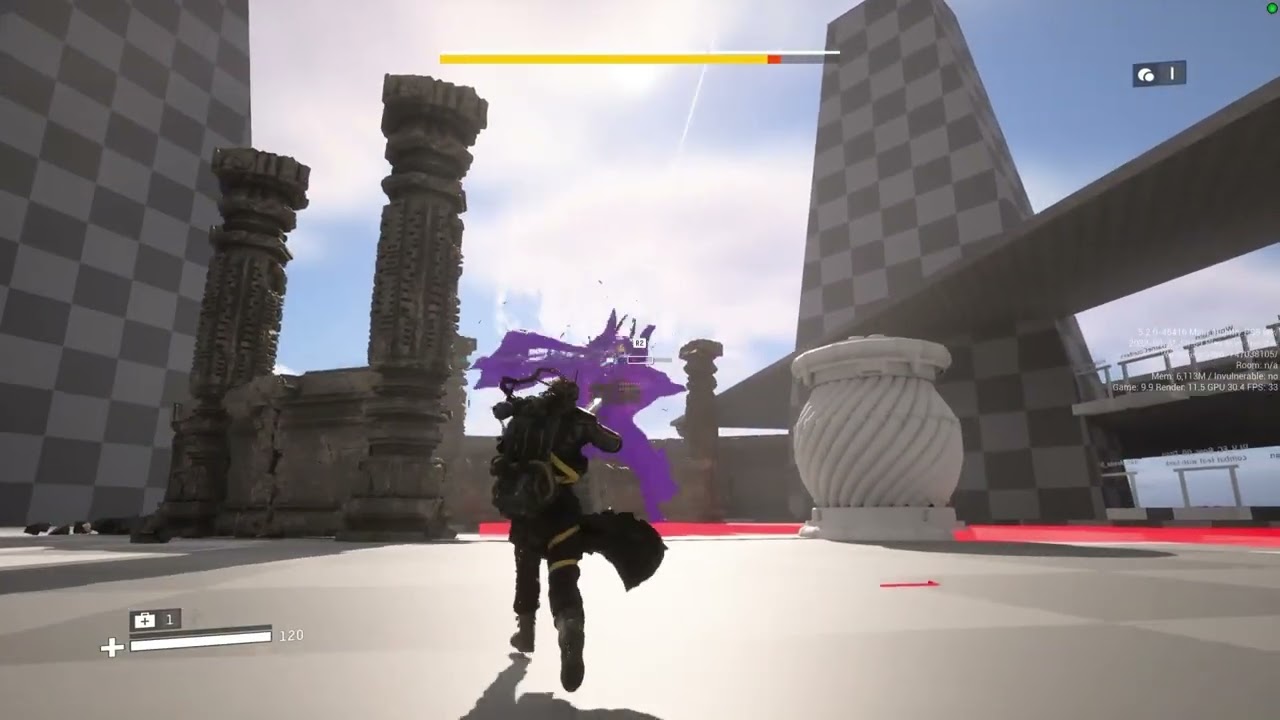
What makes a Saros boss?
When designing bosses for Saros, we adopted just a few guiding ideas, beginning with three distinct phases for each boss encounter, every with its personal identification, altering how the encounter appears to be like, feels, and performs.
A typical boss battle in Saros lasts about three to eight minutes (Saros: Zenith has a tighter arcade expertise), with the problem coming primarily from boss behaviour, enviornment transformation, environmental hazards, bullets, beams, and bodily assaults. These had been additionally designed to encourage gamers to make use of their defend, leaping, parrying, and dashing skills, understanding {that a} good boss assault ought to make gamers transfer with intent, not in panic.
Most significantly, when gamers had been defeated by a boss, we requested: do they perceive why they misplaced, do they know what to do otherwise subsequent time, did it really feel like their very own mistake quite than one thing unfair, and do they need to attempt once more?


The Bosses
Prophet — the wall boss
The Prophet was our introductory boss and a primary main take a look at for gamers. As a result of the Prophet seems early in the recreation, we needed it to show gamers what a Saros boss may very well be with out turning into a significant development blocker. With the Prophet, we needed a struggle that felt dramatic and threatening whereas nonetheless welcoming gamers to the construction and expectations of boss fight.

Architect — the flying boss
The Architect is one of the recreation’s most dramatic encounters, fought atop an enormous tower after earlier foreshadowing. The boss comes at you with every part it has, destroying the setting as the struggle unfolds, and it doesn’t stop till the very finish. All the encounter centres on the collapsing enviornment, making the grapple hook a elementary half of the battle. You aren’t simply preventing the boss; you might be preventing to outlive the enviornment.

Shepherd — the huge boss
The Shepherd is the recreation’s largest boss and largest visible spectacle, set on a ship on a stormy sea. It has an intimidating scale and culminates in a terrifying transformation by the finish of the encounter. This boss is all about tentacles, which it’s essential to dodge and soar over all through the struggle. The tentacles additionally shrink the enviornment and spawn assaults from surprising instructions. In a dramatic conclusion, you face the boss on a sloped enviornment.

Priestess — the magic boss
The Priestess makes use of phantasm and transformation, making for a much less grounded, extra surreal encounter with a powerful part identification. We needed gamers to really feel the Priestess may very well be the closing boss, even when the journey was not over but. The encounter evolves from illusion-based clone fight right into a large-scale, floating enviornment, encouraging gamers to mix fight, puzzle-solving, and platforming to outlive.

King — the closing boss
As the closing boss, we needed the King encounter to really feel direct, intense, and skill-focused. It’s also a significant narrative second, and the encounter wanted to replicate its significance. The boss battle escalates in character as a lot as in problem. It begins managed and relentless, then turns into extra brutal, and eventually one thing feral and unpredictable. Consequently, the King doesn’t depend on a sophisticated gimmick. As a substitute, the struggle checks every part the participant has discovered, the place mastery issues most.

Wanting again and looking forward to Saros: Zenith
Engaged on bosses for Saros was an incredible alternative for the Nixxes content material workforce. We aimed to make every one really feel truthful, thrilling, and price attempting once more. And every encounter challenged us to consider how we might create the most memorable moments for the participant. Extra importantly, it allow us to collaborate intently with Housemarque on the quick, responsive, high-intensity motion that defines the recreation.
With Saros: Zenith, gamers can return to those battles in Housemarque’s new Overlord Rush mode and expertise them in a contemporary, quicker, and extra replayable method. We’re excited to see how gamers tackle the problem and struggle to achieve the prime of the Leaderboard.