
Including licensed music to video games has a popularity for being a notoriously advanced and difficult course of. However California-based firm Styngr aims to make it an entire lot simpler.
The corporate was based in 2020 with the aim of permitting builders and publishers to seamlessly combine licensed music into their titles, with Styngr taking care of all the tough negotiations with music firms.
To assist on that entrance, Styngr has introduced in Stephen Cooper, former CEO of Warner Music Group, to act as chairman.
Cooper’s tenure at Warner lasted from 2011 to 2023, and noticed the firm’s revenues greater than double to over $6 billion, partly because of this of Warner shifting rapidly to embrace streaming below his watch.

Cooper thinks that traditionally, the music business has been stricken with “technophobia.”
“At the finish of the ’90s, when Napster got here round, as opposed to understanding file sharing and what they might do with that, they sued,” he says. And when Spotify emerged a number of years later, he provides, “they had been scared to loss of life of that.”
“They’re simply so nervous about tech, and so they’re so nervous about creating new precedents that they only hunker down and resist.”
“Being an outsider to music, it was simpler to cope, as a result of I hadn’t been marinated in music for my whole profession,” says Cooper, who has labored in varied industries, together with telecoms and chemical substances.
“So when Spotify got here out, I am like to my crew at Warner, ‘Hey guys, we’re going all in on this’, as a result of not being from music, I might see having the ability to lease all of the world’s music for $10 a month in the end was higher than any individual shopping for 5 albums a yr.”
Like it will definitely learnt to embrace streaming, the music business has regularly opened up to the alternatives in video gaming – though the course of for securing licensed music is often nonetheless mired in paperwork.
Licensing points
Alex Tarrand, the co-founder of Styngr, explains that usually, a ‘sync’ licensing mannequin is utilized in video games. A sync is the place a music observe is licensed for use with particular visible content material, like an advert, movie, or sport.
The difficulty is, securing a sync takes loads of time, says Tarrand. “Songs are owned by a number of entities,” he explains. “There’s the label aspect, there’s the publishing aspect, there could be a number of composers or writers on a track. It is a prolonged course of […] and requires loads of expense and settlement.”
Cooper agrees that the course of is convoluted, “significantly on the music publishing aspect, the place the publishing rights are, as a rule, fragmented amongst any quantity of distributors.”
He notes that any occasion concerned might block the whole course of. “I might personal 1% of the publishing rights of a track, and until I go together with a deal, I can cease that track from getting used anyplace.”
All in all, it is a “tremendous advanced, extremely lawyered” operation, he says, and one wherein games firms typically query the worth that is being added by licensed music.
“Music overvalues what they suppose they’re bringing to gaming, and gaming undervalues what music can do for them, and they also’re the proverbial ships passing in the night time,” Cooper concludes.
However he thinks that if the course of could be opened up, there’s large potential for the use of licensed music in games. “When folks have a possibility to weave the music they need into games in the approach they need it, it enhances […] the consumer expertise, and we have got knowledge that reveals it extends session size. It enhances retention.”
He sees a selected alternative for on-line games targeted on user-generated content material (UGC), whereby in an analogous approach to Spotify, customers might select the songs they need to match with their creations, or to pay attention to whereas they play with buddies.
“For the games creators, for the platforms enterprise, and on the music aspect, it’s going to open up a listening sector that finally will likely be a vital sector by approach of discovery of new music,” says Cooper.
It is also an extremely invaluable supply of knowledge for the music business, giving them insights into how artists are being obtained and the way music is being found. “In just about any enterprise that finally ends up in the end interfacing with customers, significantly in leisure, that knowledge is the twenty first century gold.”
How does Styngr work?
Tarrand describes himself as the platform and instruments man. “I simply construct tech stuff,” he says, having beforehand labored on issues like cellular sport promoting platforms. In the meantime, the different co-founder of Styngr, VY Esports’ Oleg Butenko, “comes out of the world of music and gaming,” Tarrand says.
The pair had labored collectively on a previous venture, Tarrand explains, and “all the whereas, we had been speaking internally about the world of music and gaming and why they do not meet, and why the two do not interface with each other.”
The conclusion was that there wasn’t a technical interface between them. “You interface with different industries by means of expertise,” says Tarrand. “You interface with them by means of SDKs [software development kits] or APIs [application programming interfaces].
“That is the way you cope with analytic companies. That is the way you cope with the entirety of the promoting business and the programmatic business. You cope with them by means of tech.”
Therefore Styngr has constructed expertise that slots into video games and instantly connects the music and sport industries. “The entrance finish is made to meet builders the place they’re at and socket into their expertise nevertheless they need to do it,” explains Tarrand.
“Now we have plug-ins in environments that take quarter-hour to put in. Now we have SDKs for those who like to have very cleaned-up code libraries. After which now we have APIs for folks [for whom] the final thing on this universe they need is one other SDK inside of their sport.”
“We do all the brutally advanced stuff”
Alex Tarrand, Styngr
Most significantly, somewhat than sport publishers having to instantly negotiate sync licenses with music publishers for particular person games and songs, Styngr negotiates blanket offers with each main and indie labels for thousands and thousands of music tracks, which it then distributes.
“We do all the brutally advanced stuff, proper?” says Tarrand. “We map the label rights to publishing rights. We do that by geography: we be certain that regardless of the place a consumer is, they’re getting the music that they are authorised to pay attention to by nation – as a result of the rights change in nearly each nation.
“We do royalty reporting, we do utilization reporting. After which that is knowledge that we expose not solely to the rights holders, as a result of they want it to operate, however we additionally expose it to the sport devs, in order that they will get insights into what their customers like.”
As well as, the music streams are eligible for the Billboard charts, which Tarrand says is “very significant for the recorded music business.”
In phrases of how the music is used inside games, Tarrand explains that there is a vary of choices, from an in-game radio station, to customers selecting particular person tracks, to extremely tailor-made picks which might be curated by the sport builders themselves.
As well as, as a result of the music is dealt with on the server aspect, model new songs from artists could be dropped in nearly as quickly as they change into out there.
Sensible purposes
So, the place is Styngr getting used? “The largest name has been in UGC ecosystems, as a result of they’re as a lot social environments as they’re gaming environments,” says Tarrand.
“One of the largest ecosystems we work in at this time is Roblox. We have additionally accomplished loads of work on the Java aspect of Minecraft as nicely.”
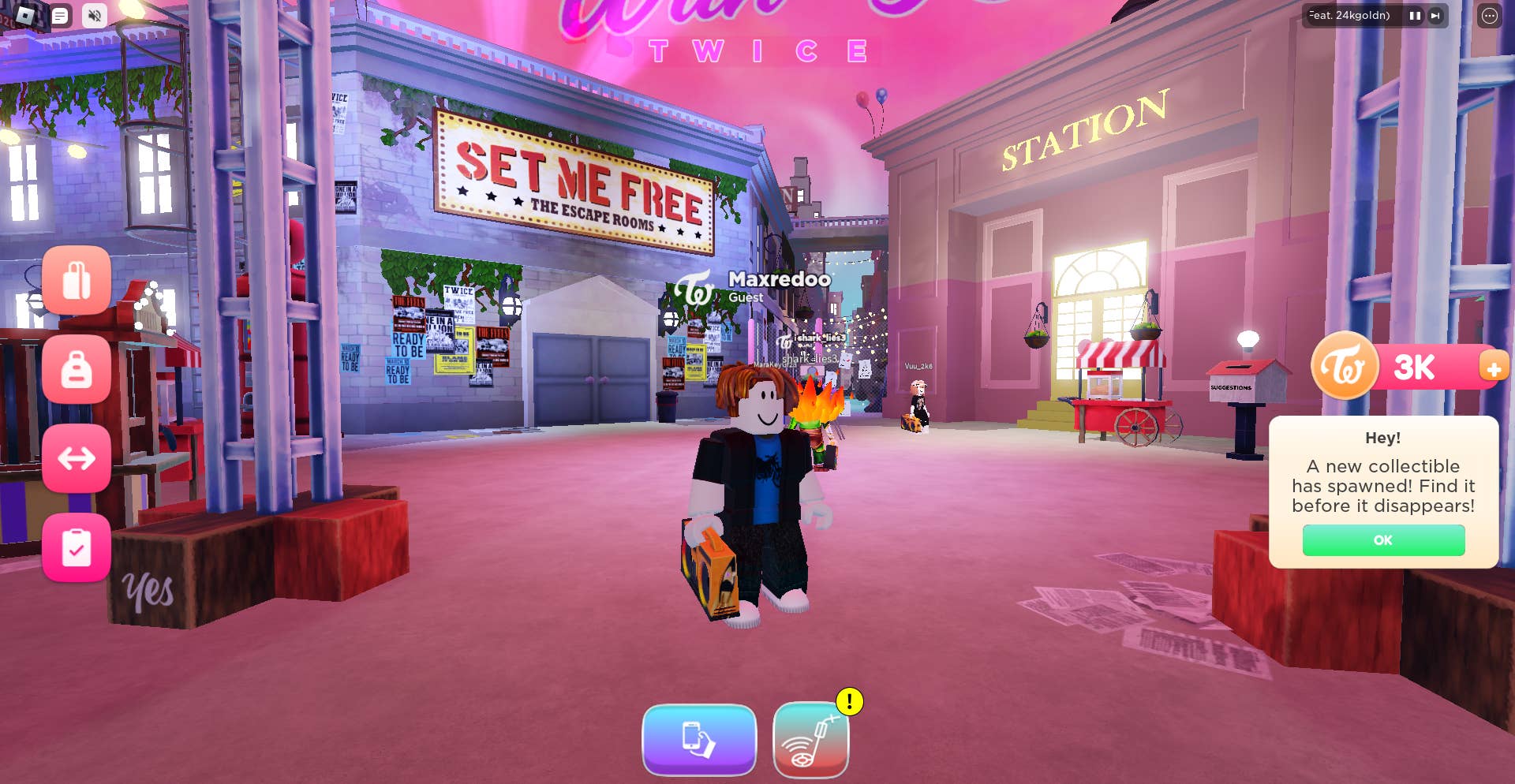
Which leads to the subsequent query – who’s paying for this? Is it the consumer, or the writer? Tarrand says there are numerous completely different fashions. In a single, creators would pay a share of their income to add music to their creations. One other sees customers paying for particular music for emotes.
However Tarrand says the purposes go nicely past that. “Now we have sports activities titles that map to real-world anthems that they use inside of stadiums,” he says, including that Styngr is even speaking to the folks behind fantasy games who “need stuff that is just a little bit extra ethereal.”
And there is even the possibility for free music streams which might be subsidised by promoting, which Tarrand thinks will likely be most relevant to the cellular world.
All in all, Cooper concludes that this new approach of connecting the music and games industries could possibly be transformative for each. “It places the two ships passing in the night time on target to truly meet one another and change a sequence of advantages.”