
Tencent is one in every of the largest video-game corporations in the world. Along with working numerous studios in China, it wholly or partly owns dozens of recreation corporations throughout the globe, together with Riot Video games, Funcom, Sumo Group, Turtle Rock Studios, Techland, Supercell, Do not Nod, Epic Video games, and most lately Ubisoft.
However Tencent has additionally earned a fame for being considerably secretive. So having the likelihood to talk with Yong-yi Zhu, VP and head of enterprise operations, technique, and compliance at Tencent Video games, is a uncommon alternative.

Zhu says that Tencent is making an effort to be extra open – noting that this interview is a part of that effort. “I feel there’s a level now the place we would like folks to higher perceive who Tencent are, what we’re doing, why we’re doing the issues that we’re doing,” he explains.
A part of the cause for that’s to draw expertise to the firm. “I feel earlier than, possibly it was a little bit of a black field,” Zhu says. He himself says he “did not actually have a great perspective” on what Tencent was really like earlier than he joined (beforehand, he was vp of studio operations at Activision).
Tencent’s aggressive acquisition technique over the previous decade or so – towards a backdrop of anti-China sentiment among US policymakers – has maybe made some folks in the West a bit of cautious of the firm. However Zhu notes the agency’s picture is totally totally different on its dwelling turf.
Zhu is American, though he is from China initially, and he says his household have very constructive associations with Tencent. “Not a lot from the video games perspective,” he clarifies, “however from every little thing that Tencent does to assist their day-to-day lives, together with WeChat and WeChat Pay, and issues that I feel 15, 20 years in the past folks would’ve thought could be loopy for these in China to have entry to.”
Nevertheless, he acknowledges that attitudes to Tencent may not be the identical elsewhere. “I feel the cause why folks is perhaps extra cautious is we aren’t very public,” he says. “We are inclined to hold to ourselves.” Tencent’s work is in the background, supporting studios, he says, relatively than in a public-facing position.
“We put the builders and the expertise first.”
A broad remit
Zhu relies in California, and he works with round 20 studios in Tencent’s portfolio, principally based mostly in Europe. His position entails issues like board conferences, discussing budgets, and greenlighting improvement phases.
However the time zones are a killer. “I begin the day very early, so six, seven o’clock in the morning,” he says, with a view to discuss with studios in Europe which can be round eight hours forward. “After which my complete crew is in China and Singapore. So I work in the mornings, take a break at round lunchtime, early afternoon, after which begin once more round dinnertime all the manner via late night.”
“I discuss to China every single day,” he provides. “I discuss to Europe most days.”
However with so many alternative studios beneath his remit, how is he capable of sustain with every little thing? He says it usually comes all the way down to prioritising totally different studios in response to launch timings. “Like, Dying Gentle: The Beast goes to be actually excessive on my precedence checklist proper now,” he says, referencing Techland’s just-launched survival horror recreation.
“The opposite factor is now we have groups that work immediately with the studios on a extra common foundation, so that they form of perceive [their challenges]. For me, I am very central. I look throughout everybody, and so there isn’t any manner for me to form of perceive the nuances of what is occurring at each studio.”
Inevitably, the greater or greater precedence video games are inclined to get the lion’s share of his consideration. “So most likely throughout two, three months, possibly 1 / 4, we form of look at all people, however a disproportionate proportion of my time will probably be targeted on the greater ones with extra potential, or the speedy ones which can be form of arising.”
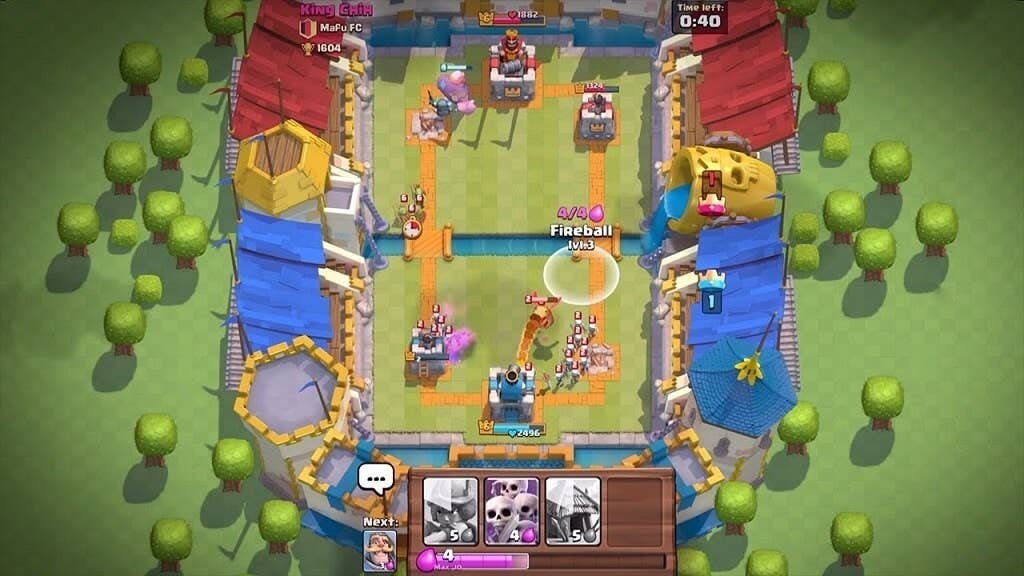
We ask whether or not there’s any form of sample in Tencent’s numerous acquisitions, which in Europe embrace every little thing from the cellular builders Miniclip and Supercell to the co-dev specialist Sumo Group to the Dune: Awakening creator Funcom.
“After I first got here right here, I used to be like, ‘Whoa, this can be a huge group of actually random stuff’,” admits Zhu. But when there is a hyperlink, he says, it is that they are all good builders. “It is folks which have been of their craft for a very long time which can be obsessed with reaching new audiences, constructing new experiences, doing considerably dangerous stuff that they’ve by no means completed earlier than.”
Western dedication
Earlier this yr, Tencent’s Chinese language competitor NetEase performed layoffs at a US assist studio for the smash hit Marvel Rivals and closed down the Austin-based T-Minus Zero Leisure, resulting in fears that NetEase is scaling again its pursuits in Western studios.
What about Tencent? Does it intend to take care of its Western presence?
“I’ll converse from the perspective of my division,” replies Zhu. “Now we have no plans at the second to drag out. You may even see a discount in funding in sure locations, and I feel a part of that’s simply the realities of the business and the dynamics of the business.”
He thinks that in the future, the key will probably be creating new IP, gameplay, and audiences – however fostering that form of innovation will take time and even handed funding.
“For those who’re doing a sequel, it is comparatively predictable what the improvement timeline is, what the innovation timeline is,” he says. However when a challenge is “extra unknown,” when “we do not know if there’s enjoyable but, we do not know if the expertise works but,” he thinks Tencent has to make sure its funding stage is smaller.
“One in all the errors the business has made in the previous was investing too shortly”
Yong-yi Zhu, Tencent Video games
“I feel Tencent in the previous has been extra about taking a recreation that from a publishing standpoint actually works and actually amplifying that. As we’re doing increasingly bespoke improvement for the West, it should take a bit extra time, and in order that generally means protecting the core dev crew smaller.
“A part of it’s to manage price, however a part of it is also to be a bit extra nimble, have extra iteration, strive issues sooner, see what works, see what would not. After which as soon as we get to a stage the place, hey, every little thing is clicking, now we have all the containers checked, then we will actually amplify.
“So it is extra about being extra disciplined throughout our totally different phases of improvement, much less so about simply general pullback, if that is sensible.”
He continues: “I feel possibly one in every of the errors the business has made in the previous was […] investing too shortly, going too huge, letting groups get too giant. Folks have a imaginative and prescient, however till you excellent that imaginative and prescient and know precisely what you are doing from at this time to the finish of the challenge, you continue to have to be a bit of bit cautious.”
We’re excited about what stage of management Tencent exerts over its many wholly or majority owned Western studios. Is Tencent concerned in day-to-day operation, or are studios given free rein?
Zhu says the studios are “principally autonomous.” He provides that he cannot converse for Riot Video games, as a result of he would not work with them immediately, however he offers the instance of the UK-based Sumo Group, which comes beneath his remit.
“We assist them set strategic path,” he says, “whether or not it is in budgeting or it is of their slate or it is in […] offering info on [the] market and developments and issues like that.”

He offers one other instance of how Tencent labored with Funcom for the launch of Dune: Awakening. “They’ve their very own inside experience, they revealed video games in the previous, they’ve a improvement crew, however at the identical time, they’ve by no means launched a recreation of this scale. So we had our tech groups go and go to Funcom and sit there and work with them on backend expertise, on servers and issues like that, to verify every little thing was secure. And likewise we can assist them scale in that regard.
“After which on publishing, that they had experience in sure geographies, and for us, we had experience in others, so we partnered collectively to determine how we attain extra of an viewers throughout the world.”
China ascendent
Proper now, we’re at an attention-grabbing level in the video games business the place Chinese language builders are very a lot on the rise, because of mega hits like Black Fable: Wukong and Genshin Impression. The announcement of a Black Fable sequel stole the present at Gamescom Opening Night time Dwell, and the upcoming China-developed titles The place Winds Meet and Blood Message look set to be large hits.
Zhu thinks there’s the alternative for cross-pollination between East and West. “One in all the issues we [talk] quite a bit about internally is ‘how will we pair up Chinese language builders with our Western builders?'” he says.
“I feel Western creatives have a really robust viewpoint on […] what the gameplay seems like, what the innovation is. However then the Chinese language dev groups can both carry extra horsepower or extra innovation, extra understanding of Asian markets as a complete.
“How will we pair up Chinese language builders with our Western builders?”
Yong-yi Zhu, Tencent Video games
“It is symbiotic in that sense. […] Collectively you are going to create a culturally extra related recreation throughout the globe.”
Zhu says Tencent would not have something it could possibly share publicly at the second, however it’s in the means of spinning up some Chinese language assist groups, with the concept of tying Tencent’s Western and Chinese language arms collectively extra intently.
“There is definitely challenges,” Zhu says, “whether or not or not it’s language, or time zone, or cultural variations.” However his position is partly about breaking down the boundaries between the two sides. “I feel increasingly we want folks to have the ability to bridge that hole.”
Zhu additionally sees huge alternatives for development in China, significantly on Steam. “I used to be lately at a chat the place we had been speaking about why the Chinese language inhabitants on Steam has grown a lot,” he says.
“A part of that was throughout COVID, folks had been required to have computer systems and laptops for schooling, and so instantly all these folks had entry to a gaming platform. So for us, it is like, ‘Okay, there’s a possibility there, how will we attain that viewers?'”
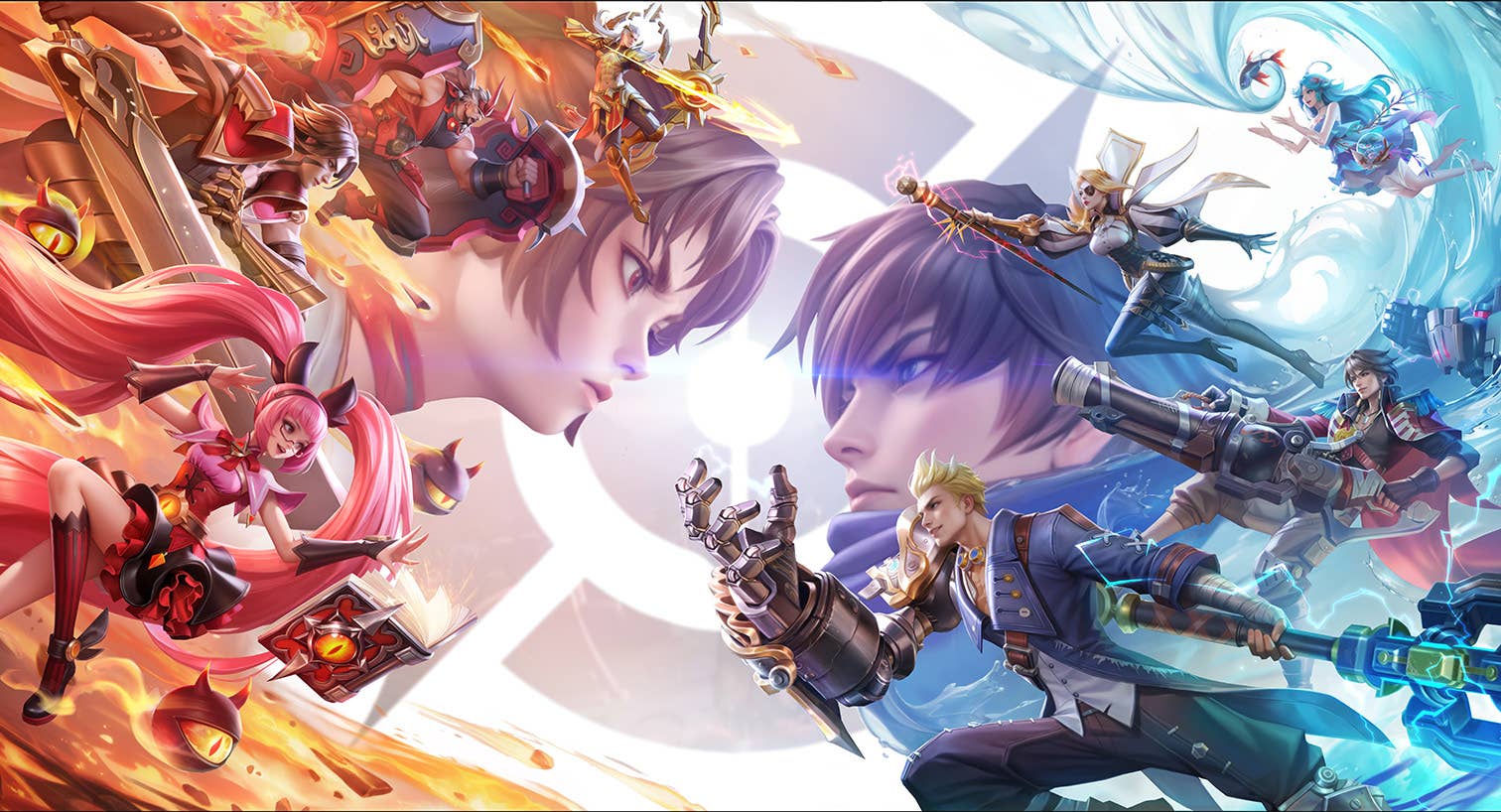
However he sees alternatives for development in all places, pointing to the success of latest IPs like Blue Prince, Balatro, and Clair Obscur: Expedition 33. And he thinks that it is not essentially about tailoring video games to an Jap or Western viewers, noting the success in the West of video games targeted on China-centric themes, like Honor of Kings and Black Fable: Wukong. Equally, the European-centric Kingdom Come: Deliverance 2 has a large player base in China.
“I look at it extra as audiences of players relatively than any particular geography. Clearly some geographies are extra tailor-made to sure sorts of video games, however I feel for me it is extra about gameplay first over every little thing else. So we glance quite a bit at what genres have development potential as the first lower relatively than geography or different issues as the first lower.”
Dwell service
A few of Tencent’s largest titles, like League of Legends, are centred round reside service. However given the latest souring of attitudes in direction of reside service following the failure of huge new titles like Harmony, what’s Tencent’s present strategy to the sector?
Zhu acknowledges that the “holy grail” of numerous video games is to be “evergreen if not essentially reside service,” however he says that the technique depends upon whether or not the studio has the vital expertise behind it.
“Some studios could also be prepared for that huge step into live-service video games and creating evergreen video games as a result of […] they’re consultants of their craft and of their style.”
He offers the instance of From Software program, saying the studio needed to develop its craft over a number of video games earlier than taking up the large open world of Elden Ring, which he thinks would have been nowhere close to as profitable had it been their preliminary effort.
“We do not solely inexperienced gentle games-as-a-service video games”
Yong-yi Zhu, Tencent Video games
“However as a result of that they had the understanding of the style and of the participant base to know what works with folks [and] what would not work, […] it has change into successful.
“And so for us, it is about crafting that journey for all of our studios. We do not solely inexperienced gentle games-as-a-service video games: now we have a mixture.
“Some video games, we really feel like studios are able to go actually huge and to construct one thing that lives without end. […] Different studios, we really feel like, hey, it is nonetheless on the path to constructing that muscle.”
He provides that it additionally comes all the way down to style. “Have a look at [the] shooter house, proper? Very crowded, very crimson ocean, and until now we have a dev crew that’s completely excellent for that market, I do not suppose we’d inexperienced gentle a shooter, as a result of we really feel prefer it’s too troublesome.
“Now, different areas, different genres the place we really feel prefer it’s not as mature, the market’s not as huge as we would count on it to be, or there’s not sufficient innovation or not sufficient perfection on gameplay, that is the place we’d focus.”
AI and the PC future
Lastly, we ask how Zhu thinks the video games business will evolve over the subsequent 5 years.
“The most important [trend] that everybody talks about is AI and its integration into recreation improvement,” he says. “There’s numerous detrimental views on AI. I feel for me, it is enabling builders to construct higher worlds and extra attention-grabbing worlds in an environment friendly manner.”
On this respect, he thinks it is perhaps helpful in the very early phases of recreation improvement, when a small, core crew is engaged on defining the challenge. “I feel with AI, you are capable of do extra artwork exploration, even when you do not have a military of artists.”
He provides that it is also helpful for issues like code overview, “the place you possibly can have the AI test whether or not your code’s going to interrupt the recreation,” and notes that in the future, it’d even be helpful from a design perspective – cautioning that “I do not know if we’re there but.”
“With AI, you are capable of do extra artwork exploration”
Yong-yi Zhu, Tencent Video games
“As soon as we get into [the] manufacturing section, it has different advantages of having the ability to assist us iterate sooner, create extra content material, [and] not be as reliant on giant groups to have the ability to execute on issues.” All in all, he sees AI as being about “doing extra with smaller groups at the early section after which growing the high quality bar as soon as we get into true manufacturing.”
Moderately than changing jobs, he thinks it is a case of utilising people who find themselves “well-versed in leveraging AI” to boost the high quality bar, giving the instance of a developer utilizing AI to shortly iterate an open-world map to seek out the “coolest gameplay sample.”
He stresses that builders have to hold updated with the AI instruments being launched (Tencent, for instance, has lately debuted an AI creation instrument known as VISVISE), and emphasises that they should not be “blind to the expertise that is going to come back and assist us. It is like [if developers] did not know the way to use Macs or Maya, they’d be manner behind. In the event that they’re like, ‘No, I solely draw artwork on paper and pencil’, or one thing like that. Similar factor.”
Exterior of AI, he thinks a key focus will probably be creating video games that run on lower-spec gadgets. Partly that is about reaching rising audiences in locations like Southeast Asia, or the LATAM and MENA areas.
He offers an instance: “Name of Obligation Cell may be very a lot targeted on high-end gadgets, and for us, PUBG Cell may be very a lot targeted on low finish gadgets,” he says, noting the focus must be: “How will we get this recreation in the arms of as many individuals as we will?”
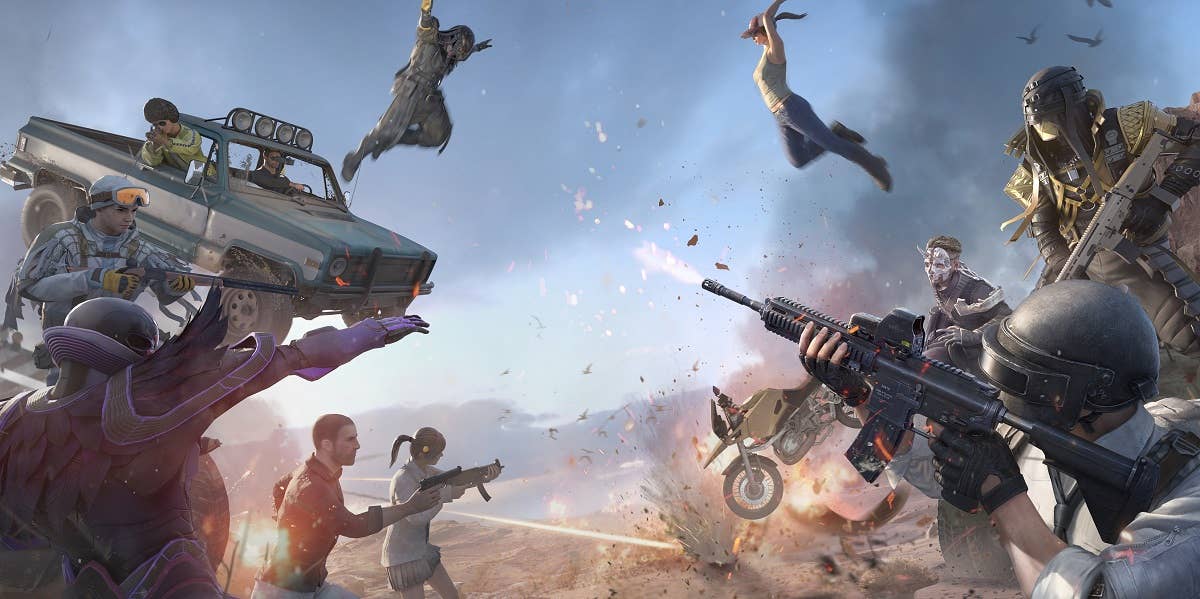
Likewise, as the PC viewers will get greater, he thinks that “we have to fear quite a bit about min spec […], so that folks round the world can have entry to our video games.”
Nevertheless, he acknowledges that this objective will rely upon the title. “The PC of us are all the time tremendous targeted on one million body price and issues like that. And which may be proper for some video games, the place they’re actually highlighting the chopping fringe of expertise.”
Total, Zhu thinks we would see the future tipping away from consoles and in direction of cellular and PC, noting that the latter is already favoured by lots of Tencent’s builders owing to its pace and adaptability with regards to issues like patches.
“I feel one in every of the largest advantages of consoles in the previous was it was an inexpensive manner for folks to have entry to gaming,” he says.
“Now, now we have increasingly inexpensive mechanisms – whether or not it is my cell phone, whether or not it is my PC – and as PC costs proceed to come back down and builders concentrate on min-spec PCs, and if consoles proceed to get increasingly costly […], they may actually begin to compete with each other.”