
Katherine Mould, senior expertise acquisition specialist at Key phrases Studios, says she was identified with ADHD at age six.
She was outgoing, made eye contact, and coped properly in college, however “my speech wasn’t nice and I could not sustain with the academic milestones of my friends,” she recollects. Her mom recognised it may be ADHD. “Her title is Diane, and Diane fought like a hellcat to get me identified.”
“Due to her, I truly was ready to develop up realizing that I wasn’t bizarre, and I used to be regular, and my mind was superior.”
However Mould recognises that not everyone seems to be so fortunate – and she or he is adamant that we’ve to recognise, settle for, and accommodate neurodiversity, even when it isn’t ‘official’.
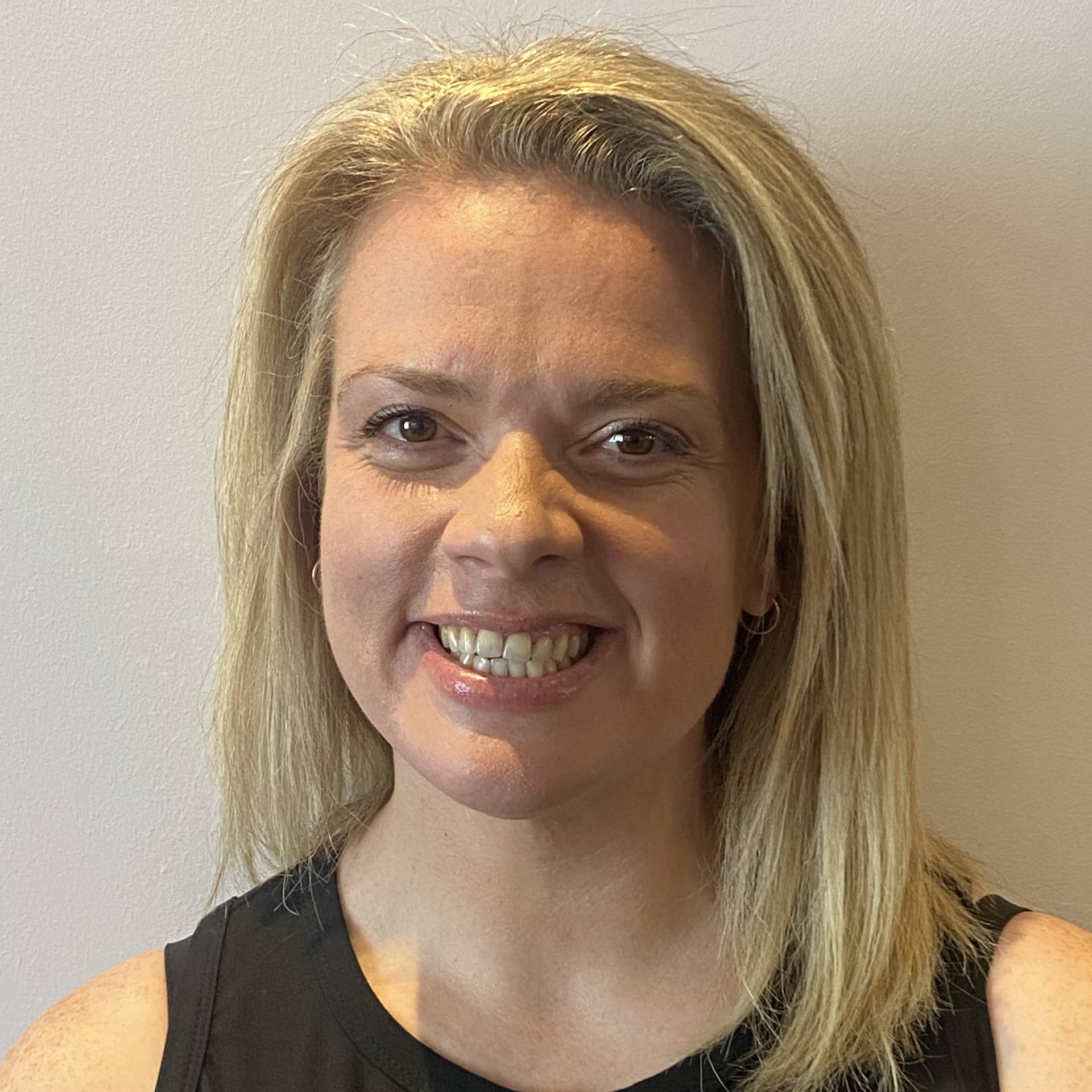
“One of many issues that I’ll all the time scream from the rooftops is you do not want a prognosis to be neurodivergent,” she says. “It isn’t one thing you want a physician to let you know you’ve. It is simply the way in which your mind works.”
“The prognosis shouldn’t be what issues, proper? You would not stroll up to any person and inform them they weren’t who they have been as a result of they did not have a bit of paper saying that.”
Mould notes that round 15–20% of the overall inhabitants is neurodivergent, however she thinks that determine is far greater inside the gaming trade – presumably as excessive as 40–50%.
“It is very prevalent,” she says. “However I believe that is as a result of video video games are such an superior area for neurodivergence, proper? Plenty of us work distant. We have beloved video video games our entire life [because] they permit us to hyper-focus in security. I believe it is simply a kind of industries that folks really feel safer in, in order that’s the place they find yourself.”
In a chat at Develop:Brighton entitled ‘Superpowers in Variety: Managing Psychological Well being and Neurodiverse Groups for Success’, Mould outlined methods in which employers and friends may assist to accommodate and encourage neurodiverse groups. The next relies on insights from the discuss in addition to a follow-up interview with Mould.
Acknowledging neurodiversity
Key phrases has an extended historical past of recognising and accommodating neurodiversity. Again in the early 2000s, a handful of people on the firm arrange one thing referred to as the Neurodiversity Community. “This has gone from 5 folks inside Key phrases to 1000’s,” says Mould.
The community permits staff from throughout the globe to share and speak about issues: Mould highlights a latest thread on the methods folks battle to work that noticed senior degree leaders sharing their points. “That was so highly effective,” she says. “The responses have been superb, since you’re seeing this frequent thread of human expertise occurring all through the corporate.”
Mould highlights that the time period neurodiversity covers a variety of situations. Folks usually consider ADHD and autism spectrum dysfunction, however Mould highlights that it may possibly additionally embody folks with dyslexia, dyspraxia, Tourette syndrome, and varied different situations. “There may be some argument to be made that individuals who have despair or nervousness may also be neurodiverse, as a result of their synapses hearth otherwise,” she says.
“They can not bodily do what their neurotypical teammates do in these environments”
Katherine Mould, Key phrases Studios
“All neurodiversity is a unique mind-set. It is completely different brains which have completely different processing mechanisms, and [the term] recognises that neurological variations are regular and priceless inside the human expertise. It does not imply that any person has an issue or that they can not course of info. It simply implies that they could do it sooner, higher, or otherwise.”
However she notes that neurodivergent folks have a tendency to hop between jobs, solely lasting a yr or 18 months earlier than they “both get burnt out or they get so overwhelmed that they begin making errors”.
“They can not bodily do what their neurotypical teammates do in these environments, and so they’ll both go away or they’re going to get fired.”
This is the reason she is such an advocate for accommodating neurodiversity in the office – as a result of by failing to achieve this, employers are lacking out on neurodivergent ‘superpowers’.
She offers examples of how folks with ADHD are sometimes ready to make selections quickly and rapidly provide you with concepts, whereas folks on the autism spectrum can usually be systematic thinkers, and other people with dyspraxia can show a expertise for non-linear considering and downside fixing. “These are all generalisations,” she notes. “Everyone’s gonna be completely different.”
One dimension doesn’t match all
However anticipating neurodiverse folks to thrive in an setting designed for neurotypical folks is destined to fail, she thinks. “It is like handing somebody the improper game controller after which judging them for not having the ability to play the game.”
“We design hiring loops and workflows and crew cultures round assumptions that persons are extroverted, quick paced, and noise tolerant, snug in social conditions, and cozy with ambiguity,” she says. Then, when a neurodiverse individual struggles, “we have a tendency to body it as a flaw in the person.”
Mould highlights job interview processes as one space that’s usually poorly designed for neurodiverse folks. “Did you present […] questions forward of time for them?” she asks. “Or are you attempting to do a ‘gotcha’ second, which I do know is quite common in hiring practices? Folks need to see how rapidly you may suppose – and for a few of us, that may be actually tough.”
She notes that standardised interviews are sometimes prioritised over actual ability analysis. “I do know that everyone likes to ask the identical query to the identical folks to hold issues truthful. And I believe that folks have gotten actually into the thought of equity, the place that’s equality over fairness.”
“Equality implies that all people will get the identical factor. Fairness implies that all people will get what they want to succeed, primarily. So I would really like to see equitable hiring practices the place the questions are based mostly on what we’d like for the job and the talents.”
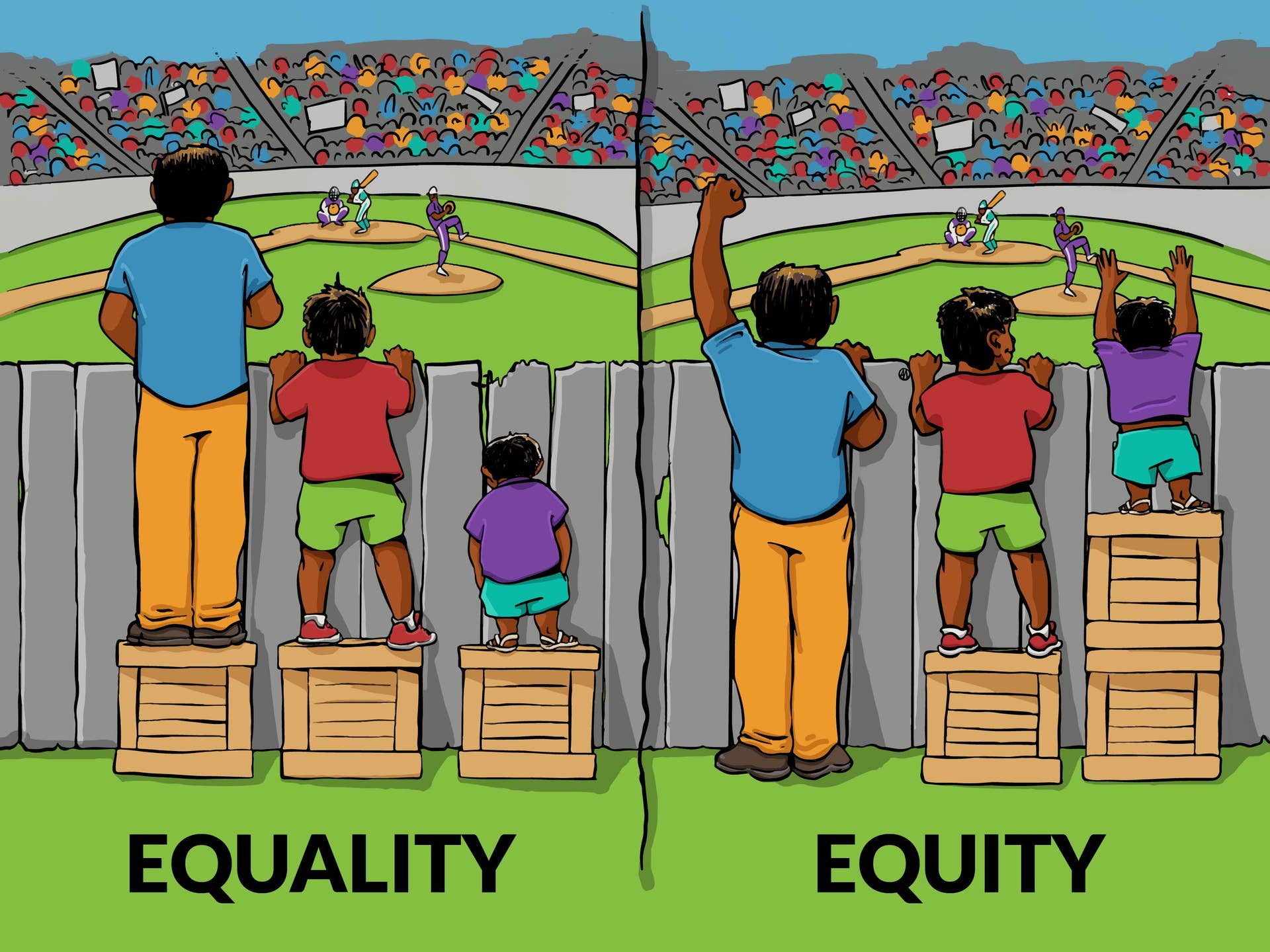
She references the famous illustration of equality versus equity that reveals three folks of various heights making an attempt to see over a fence to watch a baseball game. “That is the visible illustration that sticks for me: for fairness, it is giving folks what they want.”
“Every case is particular person, every individual wants a unique factor to achieve success,” she says. “Within the office, one dimension doesn’t match all.”
Difficult environments
Mould explains that open-plan workplaces might be notably tough for neurodiverse folks.
“Earlier in my profession, all the pieces was open plan, and all the pieces was desk pods, and all the pieces was ping pong tables, and free beer for lunch, and pizza events. And that was a sensory nightmare for me, not having an workplace that I may shut the door behind, or not having someplace that I may simply go and decompress after I acquired overstimulated by the lights – as a result of LED lights and overhead lights are the satan in my world.”
She emphasises the significance for employers to present quiet areas. But when that is not doable, then “even simply giving the worker perk of noise-cancelling headphones could make all of the distinction”.
Mould additionally emphasises that conferences might be tough. Her persona implies that she’s usually probably the most talkative one, however she factors out that loud folks “do not all the time have the most effective concepts – generally it is our quiet associates in the nook who’re overwhelmed by the social state of affairs, or they’re having a tough time processing.”
She notes that asynchronous communication – like messaging over Slack or e mail – is usually preferable to face to face communication for neurodiverse folks.
“Asynchronous communication can enable folks time to course of their solutions to questions, and permit them to search solutions, and permit them to not really feel like they’ve to reply instantly.”
“Asynchronous [communication makes it] simpler for me to course of what you have requested me. As a result of generally when persons are speaking to me, I want them to discuss two or thrice earlier than my mind truly goes, ‘Oh, that is what they mentioned’.”
She additionally advises that staff have to be frequently assured that they do not have to reply to messages instantly – as a result of that may lead to panic, which in flip can lead to errors from not having totally processed the message.
Clear expectations
“In video games, all the pieces is shifting, all the pieces is unsure, and that is simply the way in which life is,” says Mould. “However would not or not it’s beautiful if it wasn’t, at the least in your groups?”
She emphasises that offering clear expectations for precisely what every worker wants to obtain is vital for accommodating neurodiversity. Imprecise or unclear objectives are unhelpful: expectations want to be spelled out exactly.
“Do not say, ‘Hey, I need a report on Friday’,” she explains. “That does not assist me. What does that appear to be? Would you like that enter kind? Would you like a complete process listing? What would you like? Simply be as specific as you may – however not micromanaging.”
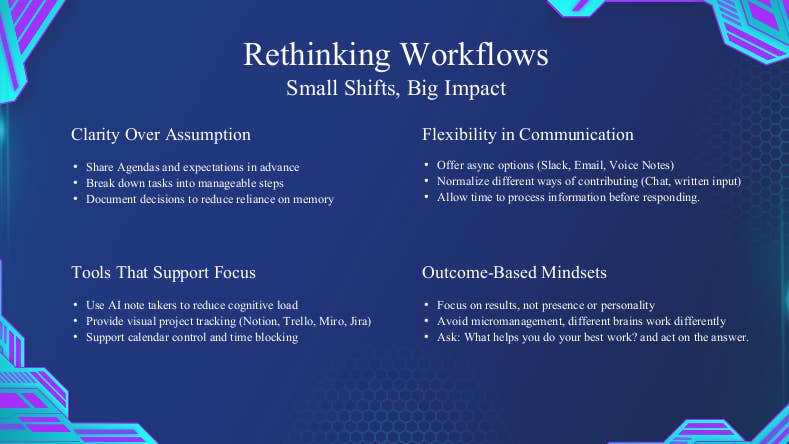
The identical rule applies to suggestions and worker evaluations. “Oblique suggestions that depends on studying between the strains, that is my most hated factor,” says Mould.
She highlights Goblin Tools as a good way of breaking down duties into manageable steps. She’s additionally a fan of Trello. “I like the Trello board. There’s something very cathartic about shifting playing cards throughout and seeing your progress.”
Equally, she makes use of an AI tool to take notes at conferences. “I named him Gary,” she says, “and Gary follows me round. And Gary won’t solely video document your complete dialog for me, however he will even enable me to ask him questions like, ‘Hey, what did I miss?'”
“That has been game altering,’ she says, noting that her total crew has now adopted the software, which is known as Metaview. “All it does is enable me to have real human interplay with that individual with out attempting to take notes,” she says. “After which on the finish of it, I can go, ‘Okay Gary, I do know we talked about this, are you able to summarise that part for me?’ And he can pull particular issues for me or give me detailed notes on it. And it has been actually useful, not only for me, however for my studio groups as properly.”
Outcomes, not persona
Mould says that accommodating neurodiversity entails switching to an output-focused mindset. “So specializing in outcomes, not presence or persona.”
“I would like folks to keep away from micromanagement. No person likes it. However I discover that us neurodivergents have a tendency to get extra micromanaged as a result of we do not keep in mind, and other people really feel the necessity to test on us rather a lot – and I do not essentially suppose that is true when we’ve the precise assist.”
“It is all about ensuring that we’ve the right issues to do our job – and never pinging me each 10 minutes to make it possible for one thing is completed.”
The hot button is specializing in the output, not how an individual behaves. “Let us take a look at the work itself,” says Mould. “Let’s not have a look at how they present up at conferences. Let’s not have a look at how a lot they talked in Slack or Groups or no matter. What are they really producing? And are you giving them the area to do this appropriately?”
“Lead with belief.”
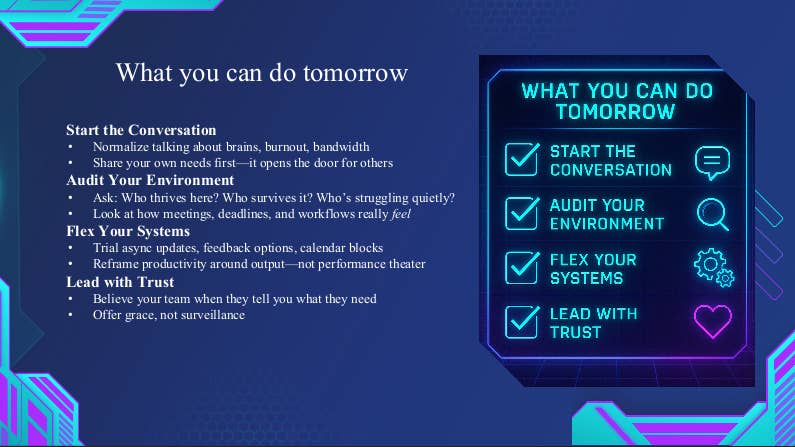
The vital factor for employers to be aware is that none of this prices something. “My AI assistant does not value us something, my Goblin Instruments […] does not value something, and kindness by no means prices us,” says Mould.
“It is nearly listening and asking folks what they want. And there are such a lot of superb instruments on the market which might be free.”
All it requires is an funding of time to spell out objectives clearly and test staff have the precise assist. “However you’d have to do this as a very good supervisor in any case, even when your crew was neurotypical, proper? You are going to have to consider process lists, you are going to have to prioritise issues.”
Nonetheless, in order for workers to profit from this sort of assist, they’ve to really feel protected sufficient to entry it.
It is nearly listening and asking folks what they want”
Katherine Mould, Key phrases Studios
“Security is what’s skilled, proper?” says Mould. “You may present all of the helps you need, but when folks aren’t utilizing them, they do not know how to entry them, they don’t really feel protected sufficient to achieve this – that is not protected.”
“Folks don’t use lodging once they concern judgement.”
“There have been quite a few instances in my profession the place I’ve been afraid to ask for what I’d really need, for concern of what may come after.”
Above all, she thinks that the primary factor folks managers want to do is present grace.
“Grace is simply permitting folks to be who they’re, and never punishing folks for these variations,” she says.
“It is basic primary human decency in numerous methods. Permitting folks to make errors and study from them, and giving grace for development.”