
The final consensus on Asha Sharma’s first 100 days as Xbox CEO has been largely optimistic. She has definitely confounded the fears of early detractors who took one have a look at her background within the firm’s Core AI division and decried her appointment to Xbox as a loss of life knell. The first worry appeared to be that she would flip Microsoft’s gaming division into one other computer virus for getting Copilot onto everybody’s gadgets; as an alternative, final month she introduced the cancellation of the Copilot challenge for consoles that had began earlier than she arrived.
General, Sharma has struck all the fitting notes on the proper moments. A few of it’s window dressing, admittedly – altering the branding to make use of an all-caps “XBOX” was one thing that bought a baffling quantity of consideration – however there have been significant decisions within the combine as effectively. Reducing the worth of Recreation Move reversed one of the crucial unpopular decisions of latest years; pledging to shift the main target of the division again to the Xbox console and even to rethink the whole abandonment of unique first-party titles are each massive decisions that characterize a significant break with the earlier technique.
Whereas the positioning has been deft and well-balanced, although, it is not unfair to level out that the majority of what Sharma has had to take action far has been extra about putting the fitting tone and fewer about making impactful decisions – no less than from the exterior perspective of customers or the remainder of the trade. The actual exams are but to return, with some very main ones looming ever nearer.

How Microsoft navigates its next-gen console, Undertaking Helix, by way of an extremely tough set of market circumstances is a type of exams. Xbox chief technique officer Matthew Ball steered lately that the corporate is rethinking its technique for the brand new machine – which is the primary direct suggestion that there is a vital pivot underway from how the high-end console was being positioned underneath Phil Spencer’s management. Ball emphasised the need for it to be affordable, a significant problem given hovering element costs. Sharma, although, has reiterated claims that will probably be a “leading-end efficiency” machine that performs PC video games in addition to having backwards compatibility.
Ball and Sharma are a part of the identical management group and talking about the identical challenge, which makes the strain between their statements curious. It is arduous to see how a tool can hit each of these marks – a high-end machine for PC gaming that is additionally going to be inexpensive and versatile. I do surprise if what’s being hinted at right here is an try to bypass the {hardware} affordability drawback with a shift in enterprise mannequin – I can think about a situation the place Helix is offered by signing up for a multi-year Recreation Move subscription with a {hardware} surcharge on it, very like a service contract for a brand new smartphone. Now that the corporate has lifted the lid on Helix’s existence, it should begin firming up some particulars within the comparatively close to future; the console’s specs, positioning and technique can be make-or-break for many Xbox followers feeling unsure in regards to the model’s future.
Getting Helix proper, although, is not the largest problem Sharma goes to should sort out within the coming months. Looming over the whole lot is the blunt actuality that the Xbox division is not doing effectively financially. In a submit this week, Sharma alluded to Xbox’s “accountability margin” being 3%, and whereas Microsoft has denied reviews that the corporate is pushing for the division to elevate that to 30%, the truth that the accountability margin numbers have come so sharply into focus speaks to a easy actuality: the numbers aren’t good, and Microsoft’s higher administration is getting antsy about it.
It is value noting that an “accountability margin” is an inner measure Microsoft makes use of for its varied divisions, and whereas many individuals have tried to roughly evaluate it to figures like working revenue at different firms, it is not fully clear what’s or is not included within the calculation. Given the proclivity typically seen within the video games enterprise for excluding some fairly stunning gadgets (like improvement prices) from revenue calculations, it is pretty probably that an “accountability margin” of three% really interprets to a major splash of crimson ink in actual accounting figures. Sharma’s statement additionally appears to trace at that, noting that the division’s revenues (not together with Activision Blizzard King) have dropped by half a billion {dollars} over the previous 5 years regardless of $20 billion being invested throughout software program, {hardware}, and providers, and bluntly concluding that “this can not proceed.”
The choice to carve out Activision Blizzard revenues from the remainder of the Xbox division right here is attention-grabbing. Activision Blizzard was a solidly worthwhile enterprise pre-acquisition, and it instantly added billions of {dollars} to the gaming division’s annual revenues as soon as the acquisition accomplished. Excluding it from the monetary dialogue most likely means that Activision Blizzard remains to be doing simply superb in that regard, and certainly has most likely turn out to be a significant load-bearing pillar for Microsoft’s video games enterprise; their profitability has probably given Xbox some respiratory room because it tries to determine the strategic shifts that might return it to a development path.
The oxygen in that respiratory room could also be working out. Main cuts (and therefore layoffs) appear to be on the horizon at Xbox as the corporate tries to show itself right into a extra centered enterprise. Speak of layoffs is an ever-tolling bell within the trade lately, however the framing of those decisions at Xbox does no less than recommend that Microsoft desires to refocus funding into key franchises and platform improvement. Sharma overtly says that the corporate has under-funded a few of its largest IPs, and decries the buildup of technical debt and over-use of third occasion distributors for Xbox platform applied sciences. This appears to recommend, no less than, that whilst Xbox trims some elements of its operation, it intends to extend funding elsewhere.

That refocusing is sensible. I can perceive why there’s frustration at Microsoft over $20 billion being invested in Xbox over the previous 5 years solely leading to declining revenues, as a result of my quick response to studying that $20 billion determine was: “The place?!” Not even probably the most ardent Xbox fan might declare that there is been $20 billion of worth evident up to now 5 years of the division’s operations. What has been evident, nevertheless, is a few extremely wasteful spending, together with a number of main video games that have been cancelled after years and years of full-scale improvement work – not prototypes or ideas dropped earlier than going into full manufacturing, however video games which had giant groups engaged on them for years and have been then shut down with nothing to indicate for it. That is the sort of factor that would eat a reasonably hefty chunk out of $20 billion.
Whilst these very tough decisions loom – and irrespective of how cuts on the Xbox division are dealt with, a few of them are inevitably going to be deeply unpopular – Sharma’s messaging remains to be setting the fitting tone. It is refreshing that she’s fairly open in regards to the division’s enterprise not being in a wholesome state proper now, and speaking about redirecting funding to place correct sources behind main franchises and rebuild in-house platform engineering know-how. These sound like the proper of strikes for the division.
Nonetheless, we should not underestimate how little room to manoeuvre Sharma really has on plenty of these questions. She’s boxed in by financial realities each across the Xbox platform and the market extra broadly. Part costs restrict the choices for Undertaking Helix, after all, though they could open up new choices for Microsoft’s ambitions within the sport streaming area, with the economics of that thin-client mannequin lastly beginning to add up if costs for shopper {hardware} stay sky-high. On the software program aspect, in the meantime, the Xbox’s comparatively low put in base places critical limits on how aggressive the corporate may be with unique software program.
“She’s boxed in by financial realities each across the Xbox platform and the market extra broadly”
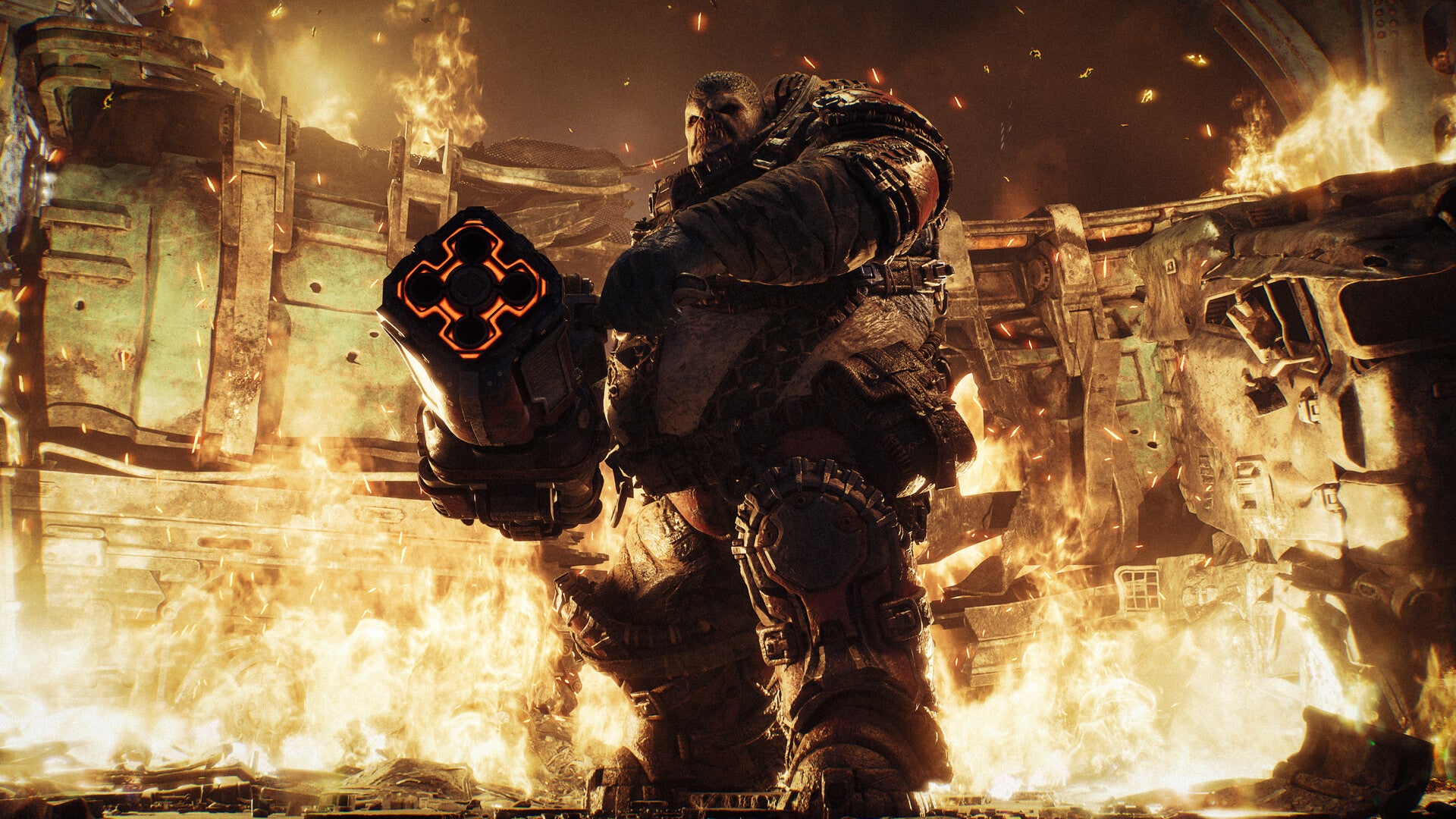
That is an enormous deal, as a result of Sharma appears to be very a lot bought on the concept that Xbox wants exclusives if it should rebuild itself out there (a judgement with which I wholeheartedly agree). She’s began to cautiously transfer again in that path; a PS5 model of the upcoming Gears of Conflict title has been dropped, marking the primary massive reversal of the technique of constructing all Xbox titles multiplatform. Among the different crown jewels, although, together with Halo, are nonetheless PS5-bound. It is a Catch-22; for these video games to contribute meaningfully to the division’s profitability, they have to be on the preferred console platform, however for them to contribute meaningfully to rebuilding the Xbox platform, they have to be unique. How Xbox navigates that difficult dilemma within the coming years can be one in all its largest strategic challenges.
Asha Sharma was greeted with suspicion and hostility from many quarters when she changed Phil Spencer, however her first 100 days within the job have nearly fully reversed these snap judgements. That is spectacular in itself – nevertheless it would not change the character of the disaster at Xbox which she inherited when she took on the position. The messaging has been nice, however the actual problem at all times lies in execution. We all know now that Sharma can speak the speak; within the coming months, she’ll have to indicate that she will be able to stroll the stroll.