
For nearly so long as the games industry has existed, the typical knowledge round sequels has remained the similar: strike whereas the iron is scorching. If in case you have successful recreation, make sure you get a sequel out the door earlier than the public loses curiosity. If in case you have a couple of hit in a row, that is a franchise, and these want a gentle launch cadence to guarantee the model’s momentum does not falter.
No quantity of eyerolling about countless sequel-itis or pining for extra unique games has ever made a dent in that relentless logic. Profitable games obtained fast sequels; actually profitable games spawned franchises that publishers would go to nice lengths to prove on as common a schedule as doable. On a few of the largest franchises, publishers would even swap totally different growth studios in and out throughout totally different iterations to make sure that when a brand new recreation launched, the subsequent instalment was already deep in growth.
My use of the previous tense right here is deliberate, as a result of over the previous decade or so, that method to sequels and franchises has wavered considerably. Franchises aiming for yearly releases have largely disappeared. Outdoors of some remaining sports activities games which have caught to the annual launch cadence, Name of Obligation is actually the final annual franchise standing. Time between sequels has grown considerably, too. It is now frequent to see 5 or 6 years elapse between a profitable recreation and its follow-up. Not so way back, there would have been three or 4 instalments on the market by that stage (or, in lots of instances, the franchise would have already got died on the sharp blade of diminishing returns).
A few of the causes for this variation are sensible. Games take longer to develop than earlier than, and the skill to create post-launch DLC implies that full-price sequels want to justify themselves past simply being new content material that does not considerably change the core recreation expertise. You possibly can additionally moderately argue that some games have gone in the other way – moderately than backing away from the fast launch cadence, they’ve leaned into it, changing into reside service titles that launch important new content material a number of occasions a yr.
Even with out these elements, nevertheless, it is also obvious that audiences’ preferences round sequels and franchises have modified considerably. It is not that the voices calling for fewer sequels and extra unique content material have “gained”. The change is, if something, extra deep-rooted – the basic means wherein audiences consider media and resolve the place to allocate their cash and consideration has shifted in a means that is inimical to common franchise releases.
This shift in client behaviour goes effectively past games – in actual fact, it is arguably simpler to see its direct impacts in different media, mainly motion pictures. This yr’s main summer time releases are a working example. Cinemagoing itself is clearly nonetheless resonating with audiences; in the previous few months we have seen huge tentpole releases hurtle in direction of the billion greenback mark (The Odyssey and Spider-Man: Model New Day), indie horror motion pictures earn orders of magnitude greater than their budgets off the again of unbelievable phrase of mouth (Obsession and Backrooms), and robust showings for sequels to motion pictures from years again (it was seven years since the final Toy Story instalment, and 20 years since the unique The Satan Wears Prada).
On the different hand, it is clear that there is not precisely a well-honed method at work right here, as a result of the summer time has additionally seen quite a lot of main motion pictures failing to get audiences out to multiplexes. Some did tremendous commercially – Minions & Monsters is barely disappointing in contrast to field workplace projections and prior releases in the collection – however others, like The Mandalorian and Grogu, Moana and Supergirl, have virtually definitely misplaced cash, and have solid doubt on total franchises and cinematic universes.
You possibly can definitely undergo every a type of individually and give you the reason why it did or did not do effectively, however there is a by means of line on all of those, I feel. The profitable motion pictures felt like occasions – a self-fulfilling prophecy as soon as they actually begin taking off, after all, however for the large tentpole releases at the very least, there was a real sense of their launch being a serious occasion.

None of them is a sequel to an particularly latest film – the closest is Spider-Man: Model New Day, nevertheless it’s showing a strong 5 years after the final Spider-Man movie, which is a fairly lengthy break for the most bankable superhero property in existence. The Odyssey constructed its occasion standing round the profile of its director and stars, and the scale of its technical ambition. Backrooms and Obsession, in the meantime, whipped up unbelievable phrase of mouth and considerably organically turned main occasion motion pictures of their second and third weeks on launch.
In contrast, the poorly performing movies lacked all sense of being an occasion. Moana is a remake of an animated film from solely ten years in the past, and Disney has been pumping out these live-action remakes at a fee of at the very least one a yr for the previous decade (final yr there have been two, one among which was the fairly horrible Snow White). The final film to star the Minions (Despicable Me 4) was solely two years in the past. Supergirl is coming a yr after a Superman film. And The Mandalorian and Grogu is from a franchise deep in the throes of viewers fatigue, in addition to being a sequel to a number of seasons of Disney+ TV reveals (it is arduous to be an occasion film if you’re setting homework assignments to your viewers).
Sport consumers are motivated to have interaction with one thing that may genuinely seize consideration in a cultural panorama cluttered with calls for on their time and consideration
That is quite a lot of discuss motion pictures, however I feel the parallels to the state of affairs with recreation franchises are clear. Sport consumers, like cinemagoers, are motivated to have interaction with games and motion pictures that really feel like occasions – one thing that may genuinely seize consideration in a cultural panorama that is more and more cluttered with clashing calls for for folks’s time, cash, and consideration.
There are numerous other ways to be an occasion – extraordinary ambition, well-timed nostalgia, star energy, and placing gold with word-of-mouth are all on the menu, and there are little doubt numerous different methods to flip the launch of a recreation or film into an occasion. A major instance, after all, is “Barbenheimer” – the collision of two very totally different blockbuster motion pictures in the similar summer time launch slot, which maybe unexpectedly elevated the fortunes of each. (Disney and Warner seem to be hoping for the same impact from launching Dune 3 and Avengers Doomsday on the similar date in December this yr; lightning appears unlikely to strike the similar spot twice.)
Undermining occasion standing, although – that is simpler to see earlier than it occurs. Franchise fatigue is a serious a part of it, after all, and the games enterprise is not any stranger to that – the unstated corollary to the “strike whereas the iron is scorching” rule has all the time been “and then flog the franchise’s corpse till it stops twitching”.
Franchise fatigue does not have to have kicked in to rob a launch of occasion standing, although. All it takes is for one thing to really feel over-familiar or insufficiently thrilling; the slightest sense of “seen it already” poisons the effectively. Occasion standing is inherently a social, community-driven phenomenon. Even when you recognize you may get pleasure from a recreation or a film, if it does not really feel contemporary, thrilling, and large, then it is most likely not going to make a cultural dent, so that you would possibly as effectively simply wait to get pleasure from it when the movie is on streaming or the recreation is on a subscription service.
GTA6 might have come out three years after GTA5 and finished tremendous; however it might by no means have acquired the degree of consideration it’s receiving now
That is now what the games industry is chasing, whether or not it absolutely acknowledges the shift or not – publishers who as soon as valued franchises with dependable launch rhythms over all else are actually locked right into a determined hunt for games which have the proper parts for the poorly understood and extremely stochastic method that makes them into occasions.
The latest huge success of legacy sequels and high-quality remakes owes a lot to these previous games and long-fallow franchises being a wealthy seam of nostalgia-driven occasions. CD Projekt’s finely honed understanding of what makes a recreation into an occasion, in the meantime, helped to elevate Cyberpunk 2077 from its disastrous launch state into being one among the most celebrated games of the decade. The lengthening timelines between sequels helps them to keep contemporary and avoids the entice of feeling like one thing gamers have seen already. And taking a tough left flip with a sequel, as Treatment is about to do with Management Resonant, is a fairly ingenious means of giving it the sense of freshness and pleasure that an occasion recreation needs.
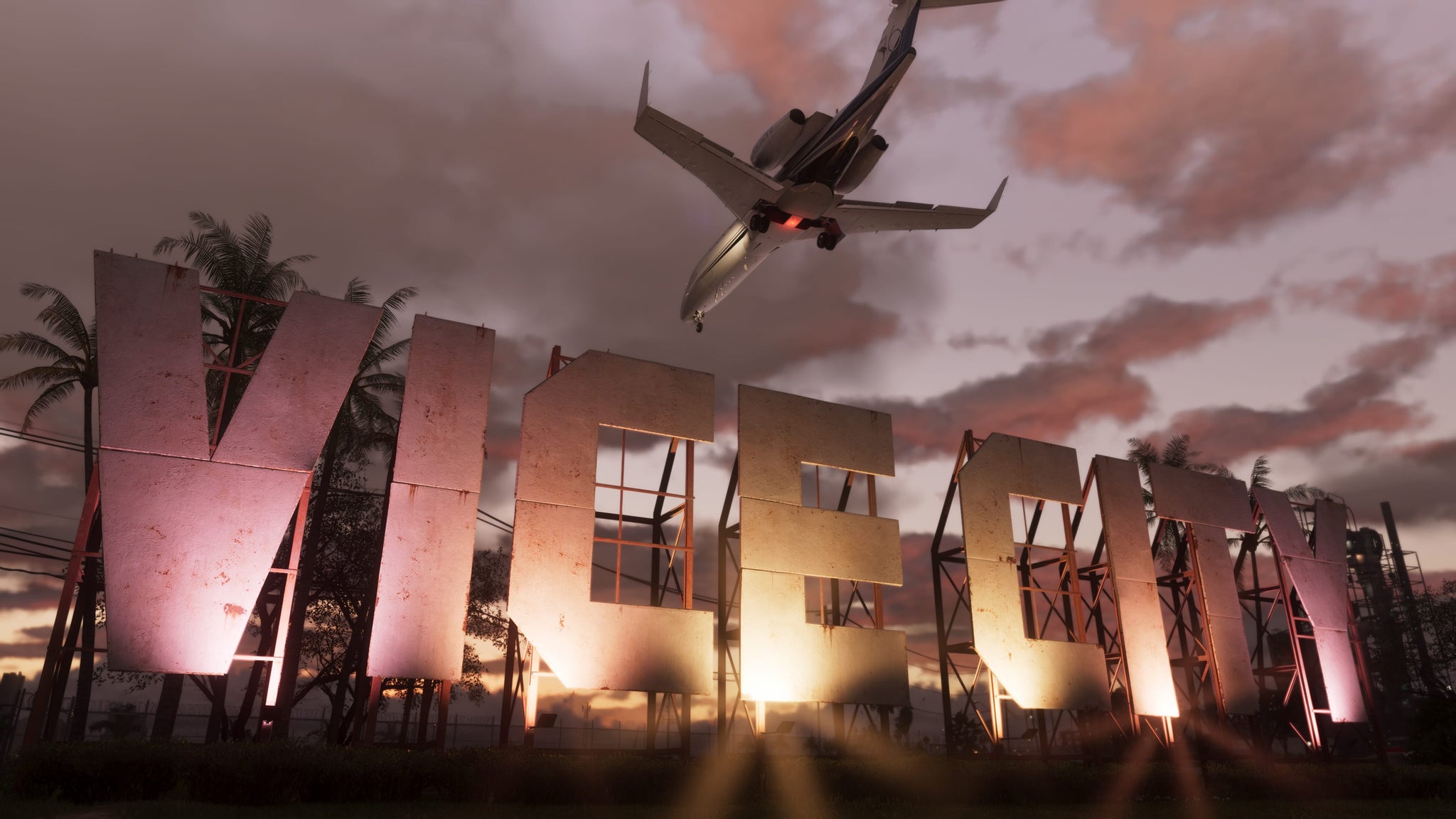
Then, after all, there’s the largest occasion of them all. GTA6 will arguably be the leisure occasion of the yr – transfer over, Dunesday – and it is showing an astonishing 13 years after the final recreation in the franchise. Rockstar arguably grasped the significance of a launch being an occasion sooner than anybody else, having left eight years between Crimson Useless Redemption and its sequel. Leaving the GTA franchise and not using a new recreation for greater than a decade after a business hit like GTA5 would have been unthinkable in earlier eras, however it could be exactly what has allowed the recreation to reduce by means of the ceaseless cacophony that’s the trendy leisure media panorama. GTA6 might have come out three years after GTA5 and finished tremendous; however it might by no means have acquired the degree of consideration it’s receiving now, and maintaining with that cadence in the intervening years would most likely have seen the franchise significantly diminished by this level.
Turning a recreation launch into an occasion is a nebulous idea at finest – there is no arduous and quick rule for a way to do it, any greater than there is a simple rulebook for turning a recreation right into a bankable franchise. What’s clear, although, is that this new actuality does rewrite the previous guidelines that the industry used to play by. Fast sequels look stale to consumers whose neurons are burning out on countless microdoses of novelty. Franchise fatigue kicks in virtually instantly when your prospects are drowning in alternative paralysis. Good IP continues to be priceless, nevertheless it’s now a long-term funding moderately than a fast buck or a gentle income stream. Few firms would ever hope for an occasion on the scale of GTA6 – however there is definitely a brighter future for these that may study and adapt to a market the place the occasion itself is the whole lot.