
There’s been a variety of writing about Aonic Group in recent times. Since its founding in 2021, the corporate has established a reputation for itself, largely due to a mergers and acquisitions technique that has enabled it to accumulate digital actuality specialist nDreams, Warren Spector’s Otherside Leisure, and Liverpool-based Milky Tea.
Like many companies, Aonic Group was began out of frustration. Co-founders Paul Schempp and Olliver Heins wished to put money into and purchase mid-tier studios, an curiosity their bosses didn’t share, as they felt these developers, regardless of typically being wildly profitable, have been too small.
So Heins left his function at MTG, whereas Schempp secured an funding from Lively Possession Capital, the funding agency by which he was a accomplice, to discovered Aonic Group. Their goal was to assist mid-level studios attain their full potential.

“We noticed that there are such a lot of firms, even a few of them are 20 years previous, which can be nonetheless very early of their journey,” chief product officer Heins tells GI.biz. “They only want somebody who helps them.”
In relation to supporting mid-tier developers – or double-I, indie-A, no matter your buzzword of selection is – it is much less about budgets. That is definitely an element, however Heins says there are lots of parts that go into selecting which initiatives to again.
“The entire trade must begin to change how they see budgets,” Heins explains. “I’d say that we actually have to imagine within the imaginative and prescient. Does this recreation have an viewers? Is it entertaining?
“The second factor is that we have to contemplate whether or not we will construct this recreation inside an inexpensive timeframe, given the dynamic nature of the market,” Heins says. “We would not need to again a recreation that’s going to take seven or eight years to make as a result of we do not know what the world will seem like in that timeframe.
“The very last thing is that we assess the market alternative for the product. How huge is the market? How saturated is the market?”
Heins continues: “Out of that, we calculate what the potential accessible market dimension is, then take into consideration how good the sport is and the way a lot of a profitable market we will get. On that foundation, we merely ask how a lot cash we will make, and that determines how a lot cash we’re prepared to spend on a recreation. If it falls into that, we’re okay with that. We’ve video games that value $100,000, we now have [games] that value $40 million. We simply have to imagine that it is a viable enterprise.”
As talked about, Aonic has been on one thing of a buying spree since its inception. When it was arrange, the goal was to personal 12 firms by 2026. Together with the Megabit publishing arm that it launched in 2024, the agency is already very near that aim.
However Aonic says that it’s being cautious with its M&A technique, selecting to be selective quite than shopping for no matter is on the market.
“We wished to create a bunch the place folks assist one another,” Heins says. “Synergies are essential for us. Every time we have a look at an organization, we’re evaluating whether or not it may possibly add worth to the group. One plus one must be greater than two. We’re a video games group, which is a house for small mid-size studios, which need to be a part of a extremely synergetic group and household.”
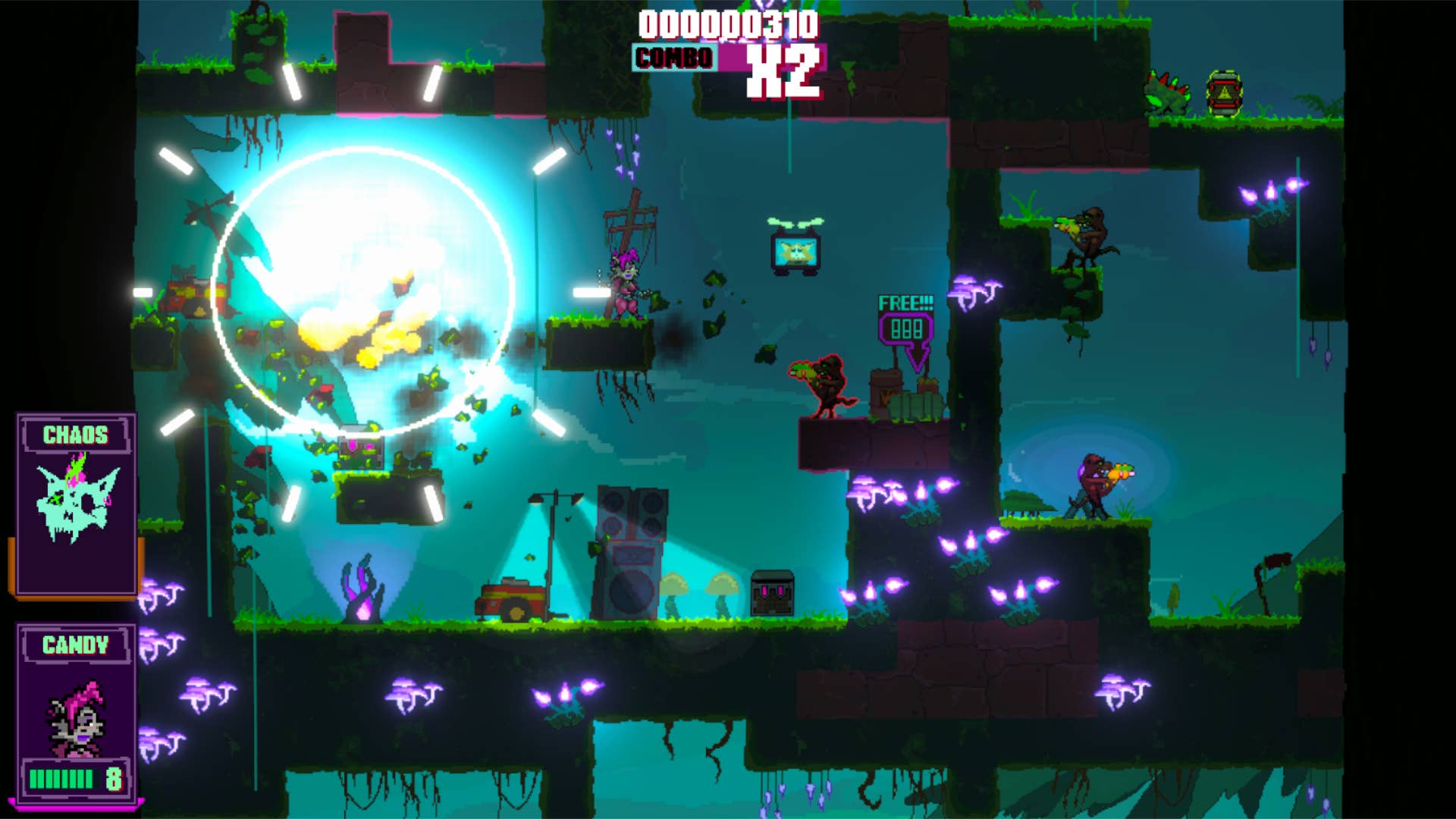
These synergies to this point have included studios teaming as much as mix their cell and IP information to construct a product for an unnamed US company big. Aonic has additionally helped Otherside keep small by shifting into outsourcing.
“They do not need to be larger than 50 or 60 folks to maintain the creativity on an important circulate,” Heins explains. “However they wanted extra manufacturing. Outsourcing in AAA is closely overpriced, however the larger downside is that you do not know the folks working on your recreation.
“We’ve BKOM, an outsourcing firm primarily based in Canada. We scrapped outsourcing and as a substitute determined to in-source with BKOM. Now we do not have to pay the margin for a third-party, which reduces the worth by 40-to-60 per cent.”
Listening to Heins focus on an M&A technique geared not simply at rising right into a European powerhouse but in addition introducing synergies and bettering efficiencies remembers a dialog with Lars Wingefors of Embracer Group back in 2018.
As you may need learn, issues have not been going nice for that exact European video games big prior to now few years. It was overleveraged and made some unhealthy monetary calls, having embarked on a veritable buying spree of M&A exercise.
“We’ve video games that value $100,000, we now have [games] that value $40 million. We simply have to imagine that it is a viable enterprise.”
Olliver Heins, Aonic
However Heins is assured Aonic will not undergo the identical destiny as a consequence of some key strategic variations.
“The businesses we purchase are on a really totally different a part of the journey,” he explains. “Embracer purchased very huge, established firms with huge manufacturers and IPs. We didn’t purchase these sorts of firms. We solely purchase firms the place we imagine they’ve two, three, or 4 steps forward of them. The largest firm we now have acquired to this point is nDreams and it had solely 79 members of workers on the time. It is simply method simpler to work with smaller firms.
“The second benefit is that we aren’t public. Every part Lars and Embracer did was for the share value, which is a good and legitimate technique. They’d performed offers, possibly only for that motive, which is authentic,” Heins continues.
“That is what Lars’ job as CEO was: he had a accountability to his traders. We do not have that. We’ve traders, however our technique is concentrated on a longer-term to mid-term timeframe. We’ve the luxurious of with the ability to purchase firms realizing there isn’t any revenue. There isn’t any instant impression on our valuation.”
Its Megabit publishing arm was based – once more – out of frustration with a few of the offers the studios it had acquired had signed.
“We noticed publishing agreements that have been simply horrible,” Heins says. “Some publishers say they will give developers 50 per cent of improvement prices, however they need 80 per cent of income after they get their a reimbursement, they usually do not give devs any ensures.
“There are two explanation why folks settle for these phrases: one is capital, [because] studios run out of cash to complete the sport. However the second downside is that in case you are one recreation studio, significantly an indie, you do not have the cash to have your individual publishing staff. These have been two issues we did not have.” Megabit is performing because the writer for all of Aonic’s video games, however the firm can also be signing third-party titles.
“First social gathering is essential for us, it is long-term worth creation for Aonic,” Heins explains. “Third-party can also be essential as a result of we have to feed again into the ecosystem. We need to do extra third social gathering. It is quite simple, now we now have a reputation and we obtain some unbelievable pitches. It is truthful to say it is much less danger for us. The overall worth creation in the long run isn’t the identical, however income potential is implausible.”
A lot of the protection round Aonic Group to this point has centred on its funding and acquisition exercise. There’s nonetheless extra of that to return, however Heins says that the tempo has slowed down in the interim.
“We nonetheless want a number of elements in our tech vertical,” he says. “There are nonetheless some small bits and items we would like so as to add to that.
“On the video games aspect of issues, we’re not fairly there with cell but. That is what we’re nonetheless in search of. Once we first seemed, firms both did not match the group or have been simply too costly. There was a gold rush throughout COVID. Individuals paid extremely excessive costs for cell studios.
“We need to [make] financially affordable offers as a result of we’re not public but, so we now have to take a look at the multiplier we pull. We’re now trying into a number of cell video games firms. M&A will nonetheless be taking place, however far more chosen and focused.”
Not public… but. Definitely, an IPO is one thing which may be of curiosity in some unspecified time in the future sooner or later.
“It all the time relies upon on who you ask,” Heins laughs. “We positively goal to have an exit occasion. We’re an organization that was closely invested in by Lively Possession, and we have had different funding. They’ll finally need their a reimbursement. We goal to have an exit occasion and we plan to present that to our workers as a result of roughly each worker is incentivised to have an element in Aonic. Logically, an IPO is one state of affairs. We’re not working on that proper now. There’s many various methods of getting an exit and an IPO is [potentially] certainly one of them.”
Trying to the long run, Heins desires Aonic to each make nice video games for the market, whereas additionally ensuring that it’s doing proper by its backers.
“We need to keep on a development path,” Heins says. “Ideally, we can’t have years with out development as a result of it is extra thrilling to be rising. A very powerful factor is we all the time need to be a dynamic firm that can all the time have the ability to modify to the market.
“Should you have a look at the video games market 5 years in the past, it’s extremely totally different to the one we now have in the present day. We all the time need to be an organization that may modify the place potential.”