
Company financials season will not be essentially the most thrilling of the 12 months’s altering seasons, nevertheless it does current a uncommon alternative to take the industry’s pulse in a more-or-less goal means.
It might be an exaggeration to say that monetary stories and the statements made on the earnings calls which observe them are free of promoting bluster, however completely different, stricter guidelines apply right here than at different instances. Firms can and do spin the numbers, however the numbers themselves should be reported truthfully – which signifies that everybody will get a probability to see how everybody else is doing, and alter their very own planning and outlook accordingly.
Since that is additionally normally after we get agency updates on cargo figures for console {hardware}, that is the story that tends to draw essentially the most focus. So with the launch of Change 2 quick approaching and the specter of tariff impacts looming, it is no shock that that is been the case on this event as nicely.
Nonetheless, whereas platform holder outcomes do maintain particular significance for the industry, they’re considerably separate from the truth that almost all different corporations on this enterprise are going through. For the broader image, we actually do must dig into the stack of stories issued from publishers across the globe.
This quarter – and certainly this 12 months, since most corporations are reporting full-year figures – a lot of these stories make for considerably critical studying, even by the dry requirements of company financials. Wanting throughout the most important outcomes launched up to now few weeks from corporations starting from Capcom, Sq. Enix, and Sega, by way of to Ubisoft, Warner Bros, and Take-Two, there’s unsurprisingly a nice deal of range on show given their very completely different market positions and product line-ups, however there are nonetheless a few developments that transcend the travails of a single firm and are price exploring as potential bellwethers for the broader industry.
Firstly, and maybe most regarding – gross sales are typically down, with most corporations reporting a drop in revenues over the previous 12 months. This is not common, with Capcom being a notable exception because it continued a genuinely spectacular years-long successful streak, and Take-Two additionally managing to report a few share factors of growth thanks largely to nice efficiency for its sports activities titles.
General, although, revenues appear to be in decline proper now. The underlying causes differ in every case – you possibly can look throughout every firm and pinpoint the particular selections or issues every of them suffered – however the broader pattern continues to be significant. That is particularly the case since this suits with the warning indicators which have begun flashing in market information from varied territories around the globe, suggesting that general client spend on gaming has fallen over the previous 12 months, albeit solely by a comparatively small share.
Regardless of the decrease gross sales numbers most corporations are reporting, nevertheless, a number of of those publishers are nonetheless exhibiting enhancements in working revenue – notably Sega and Sq. Enix, each of which had been extra worthwhile over the previous 12 months regardless of their revenues being decrease. That is due partly to restructuring and narrowing the main target of their improvement efforts, however a main issue can also be the sturdy gross sales of again catalogue titles, which incur minimal prices and are thus nice for a firm’s backside line.

These long-tail gross sales are proving essential to preserving the industry’s financials wanting wholesome (and if we take a broad definition, you would make an argument that transactions in video games like GTA On-line additionally comprise a type of long-tail gross sales for Take-Two, for instance), however they might additionally level to a rising value sensitivity amongst customers who’re exhibiting extra willingness to purchase competitively priced older video games somewhat than forking out for full-price releases in some circumstances.
Once more, if that’s the case, it suits with broader financial developments; we all know that customers in a lot of territories are feeling a critical squeeze on their discretionary expenditure, and looking for competitively priced alternate options is a pure response in that case. If that is impacting the video games industry’s prime line, then this might doubtlessly imply that the industry is going through its very first recession (not counting the imply reversion that we noticed after the huge industry growth recorded within the first couple of years of the pandemic).
There’s a long-standing piece of standard knowledge which says that though particular person sectors could endure, the video games enterprise general is well-insulated in opposition to recessions (we used to say “recession-proof” a couple of many years in the past, however I do not know anybody who’d care to make a wager on that assertion nowadays). It is because video games provide large worth for cash in comparison with most different discretionary expenditures – such that customers who’ve slashed their spending on journey, going out, and different costly hobbies and pursuits may very well find yourself modestly rising their gaming expenditure to fill the ensuing free time.
Even by the video games industry’s ordinary requirements of franchise obsession, that lack of deal with new IP creation or enlargement stands out as uncommon
That logic has been strongly challenged in recent times by the existence of issues like subscription video companies, which provide hours-per-dollar of leisure simply comparable with any sport, or free-to-play video games. To not point out the opposite free different most popular by many customers: doomscrolling your means by way of hours of brain-rot. Furthermore, there’s an particularly difficult calculus at work proper now, as a result of the sturdy chance of widespread belt-tightening by customers is coming proper as gaming is within the midst of attempting to extend costs for lots of its top-line merchandise.
The explanations for which are nicely and good, however the timing is horrible, and in these outcomes we could also be seeing the primary indicators that some teams of customers are literally noping out of paying larger value factors for premium video games. It is not simply competitively priced again catalogue titles that appear to be over-performing relative to different segments. We’re additionally seeing very sturdy efficiency from video games (similar to EA’s Break up Fiction, and indie title Clair Obscur: Expedition 33) which selected to launch at $50 value factors.
Their success is a information level price allowing for at a second when a number of publishers try to push previous $70 and set up $80 as a new common value degree.
The truth that issues like remasters of again catalogue titles sit comfortably at cheaper price factors might be a part of their attraction, each to customers and to publishers. The restructuring of improvement efforts that many publishers are presently enterprise is at all times described when it comes to streamlining and bettering, however typically seems a lot like strategic de-risking – focusing in on sure-fire bets and a small variety of core franchises.
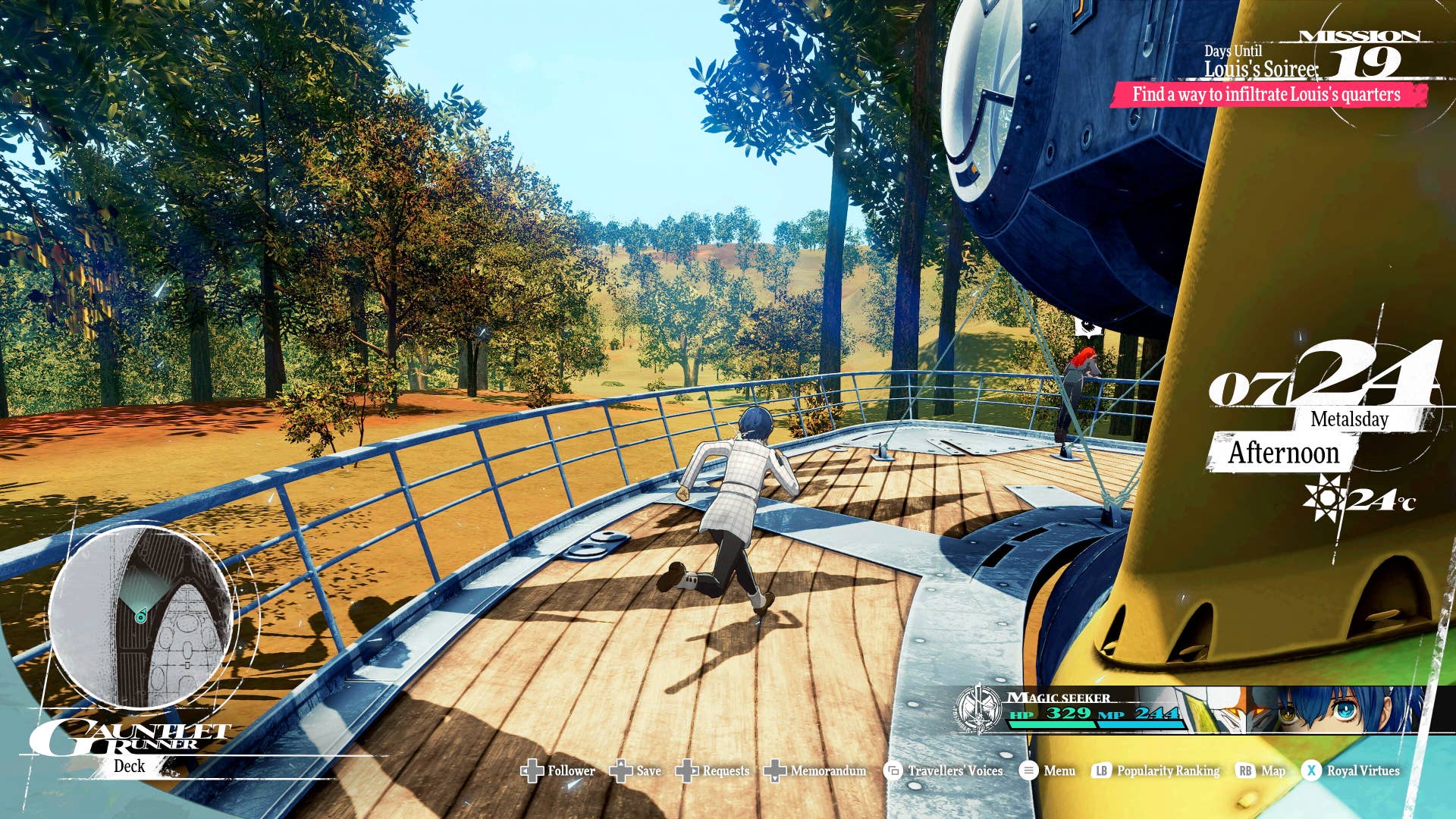
Actually, one frequent level throughout each firm that has reported outcomes up to now couple of weeks is that they are all fairly open about being tightly targeted on three or 4 core IPs. The one firm within the bunch with something actually constructive to say about a non-core or authentic IP was Sega’s reference to the sturdy efficiency of Metaphor: ReFantazio.
Even by the video games industry’s ordinary requirements of franchise obsession, that lack of deal with new IP creation or enlargement stands out as uncommon – and even within the corporations which are doing very nicely, just like the aforementioned Capcom, it is notable that remakes, remasters, re-imaginings and re-visitings describe just about all the software program pipeline. The general sense is obvious: publishers are in battening-down-hatches mode proper now.
In that respect, assuming the financial scenario goes to worsen, this strategy most likely is smart. Firms going through a market through which customers are feeling financially precarious must deal with comparatively positive bets for their headline titles, and fill within the gaps with lower-cost video games, for which digging into the again catalogue is right.
Within the medium to long run, although, we now have to hope in opposition to hope that publishers who’re narrowing their focus to tentpole franchises proper now have some technique for getting again to constructing new IPs ultimately. Franchise exhaustion can also be a very actual concern, and growth, finally, has to come back by way of artistic innovation. No firm can run eternally simply by discovering more and more aggressive methods to flog the identical dying horses.